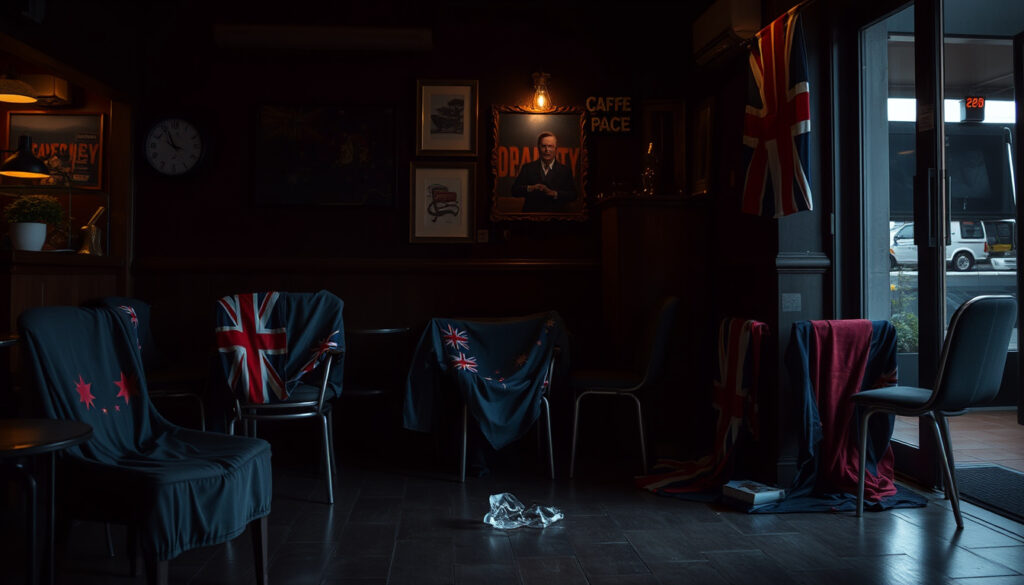
Lindt Cafe Siege: Key Facts, Timeline, and Aftermath
Most Australians remember exactly where they were when news broke of the siege at Martin Place. That December morning in 2014, a lone gunman walked into the Lindt Chocolate Cafe and held 18 people hostage for 16.5 hours, an event that would end with two innocent lives lost and fundamentally reshape how police respond to terrorist threats. A decade on, the findings from the coronial inquest offer a clearer picture of what went wrong and what changed.
Date: 15–16 December 2014 ·
Duration: 16.5 hours ·
Hostages taken: 18 ·
Hostages killed: 2 ·
Gunman: Man Haron Monis ·
Gunman killed: Yes (shot dead)
Quick snapshot
- Monis’s exact motivation beyond ISIS affiliation remains debated
- Whether police could have acted earlier to prevent casualties
- The full extent of Monis’s mental health history
- First major terrorist siege on Australian soil (The Sydney Morning Herald)
- Inquest found police should have entered sooner (The Sydney Morning Herald)
- Triggered 45 recommendations for reform (Bond University research repository)
- Ongoing review of police tactics and negotiation protocols
- Legacy continues to influence counter-terrorism training
- Public memorial at Martin Place remains a site of reflection
Eight key facts capture the essentials of the siege.
The table below lays out the core data points from the event and its official classification.
| Label | Value |
|---|---|
| Date | 15–16 December 2014 |
| Location | Lindt Chocolate Cafe, 53 Martin Place, Sydney, NSW (Wikipedia) |
| Duration | 16.5 hours (Wikipedia) |
| Number of hostages | 18 |
| Hostages killed | 2 |
| Gunman | Man Haron Monis (Wikipedia) |
| Gunman fate | Shot dead by police (Wikipedia) |
| Terrorist classification | Yes (ISIS-inspired) (SBS News) |
How many people were killed in the Lindt Café siege?
Number of fatalities
- Two hostages died: Tori Johnson (34, café manager) and Katrina Dawson (38, barrister) (Wikipedia)
- The gunman, Man Haron Monis, was also killed by police (Wikipedia)
- No other hostages were physically harmed
Names of the deceased
- Tori Johnson – a 34-year-old café manager executed by Monis in the final moments
- Katrina Dawson – a 38-year-old barrister and mother of three killed by a police bullet fragment (Wikipedia)
Cause of death
Katrina Dawson’s death was not caused by the gunman’s fire. A fragment from a police tactical team bullet ricocheted and struck her. That distinction shaped the most painful question at the inquest: did the tactical response itself cause the second fatality?
Three hostages sustained injuries, and two police officers were wounded during the final assault (Wikipedia). The toll is a stark reminder that in hostage situations, rescue operations carry their own lethal risks.
The implication: the casualty count isn’t just about who fired — it’s about whether a different tactical decision could have saved Katrina Dawson’s life. The inquest found that police should have entered the cafe sooner (The Sydney Morning Herald).
What was the point of the Lindt Café siege?
Gunman’s demands
- Monis demanded an ISIS flag and a conversation with the Prime Minister (Wikipedia)
- He forced hostages to hold a black flag with Arabic writing
- The siege was classified as a terrorist incident by coroner Michael Barnes (SBS News)
Links to ISIS
Monis claimed allegiance to the Islamic State, though authorities later noted his understanding of the group’s ideology appeared shallow (Wikipedia). The self-styled sheikh had a history of erratic behaviour, including sending offensive letters to the families of deceased Australian soldiers.
Psychological profile
The inquest found that police relied on flawed advice from negotiators and a police psychiatrist who underestimated Monis’s risk (The Sydney Morning Herald). Monis’s exact motivations beyond ISIS affiliation remain unclear, though the evidence suggests a mix of political extremism, personal grievance, and mental instability.
Is the Lindt Cafe still there?
Current location
The Lindt Cafe at 53 Martin Place remains open and operational (Wikipedia). Martin Place is a pedestrian plaza in Sydney’s central business district, near major landmarks like the Sydney GPO.
Renovation and reopening
The timeline of the cafe’s closure and return to business is outlined below.
| Event | Date |
|---|---|
| Siege occurs | 15–16 December 2014 |
| Café closes for renovation | December 2014 – March 2015 |
| Café reopens | March 2015 (Wikipedia) |
The pattern: the decision to reopen the cafe was itself a statement — that normal life in Martin Place would not be surrendered to the spectre of terrorism. For Sydneysiders, it’s a daily landmark that quietly remembers what happened inside.
Memorial
A permanent memorial plaque was installed outside the cafe to honour the victims. The site has become a place for annual vigils and public reflection.
What happened to Katrina Dawson?
Katrina Dawson’s background
Katrina Dawson was a 38-year-old barrister and mother of three children. She was at the Lindt Cafe on the morning of 15 December 2014, having coffee with a friend who was pregnant.
Circumstances of her death
When police stormed the cafe at 02:13 on 16 December, a fragment from a police bullet ricocheted and struck Dawson. She died at the scene (Wikipedia). The coroner found that Monis did not directly harm her.
The police operation that was meant to end the siege and save the hostages also cost an innocent life. For Katrina Dawson’s family, the inquest became a campaign for operational transparency — to ensure no other family would lose someone to a ricochet from a well-intentioned but flawed tactical response.
Aftermath and family
Dawson’s family later advocated for changes in police response protocols. Their testimony at the inquest helped drive several of the 45 recommendations that emerged from the proceedings (Bond University research repository).
Where was the Lindt Cafe located?
Martin Place address
The café was at 53 Martin Place, Sydney, NSW 2000 (Wikipedia). Martin Place is a pedestrian-only thoroughfare in the heart of Sydney’s financial district.
Cultural significance
Martin Place is surrounded by major landmarks: the Sydney GPO, Reserve Bank of Australia, and the 7-Evelyn building. It is a hub for workers, tourists, and commuters. The choice of location was deliberate — Monis wanted maximum public visibility.
The catch: the same iconic location that made this siege so visible also complicated police containment efforts, because of the open sightlines, underground train stations, and dense above-ground pedestrian traffic.
Timeline: the Lindt Cafe siege hour by hour
Key moments
- 15 December 2014, 09:44 – Man Haron Monis enters Lindt Cafe and takes 18 hostages (Wikipedia)
- 15 December 2014, ~10:00 – Police establish perimeter; negotiations begin
- 15 December 2014, afternoon – Monis forces hostages to hold a black flag with Arabic writing; demands made
- 15 December 2014, evening – Several hostages escape; police snipers in position
- 16 December 2014, 02:13 – Police storm the café after Monis appears to execute Tori Johnson (The Guardian)
- 16 December 2014, 02:16 – Monis shot dead; Tori Johnson and Katrina Dawson confirmed dead
- 2015–2017 – Coronial inquest held; multiple recommendations made
- 2015 (March) – Lindt Cafe reopens after renovations
The inquest revealed a critical missed opportunity: after Monis first discharged his weapon, police had a window to breach the cafe but did not (The Guardian). UK armed-policing experts later described the final assault as “clumsy and messy” (ABC News).
What the coronial inquest found
Classifying the siege
NSW Coroner Michael Barnes found the siege was a terrorist incident (SBS News). This classification had both legal and operational implications for how future sieges would be managed.
Police tactics under scrutiny
The same ‘contain and negotiate’ strategy that had worked in dozens of previous Australian hostage situations failed here because it was applied rigidly to a perpetrator who was always going to kill. The coroner found police commanders were wrong not to approve or consider an earlier ‘deliberate action’ plan (The Sydney Morning Herald).
The inquest found that NSW Police used a ‘contain and negotiate’ strategy during the siege (NSW Coroners Court official government report), and that this approach failed in this case (SBS News). The coroner made 45 recommendations in the final report (Bond University research repository), including reviewing the training and accreditation of negotiators and reconsidering the entrenched philosophy of ‘contain and negotiate’ (The Sydney Morning Herald).
Missed opportunities
- There was no adequate examination of how effective contain-and-negotiate remained during the siege (SBS News)
- A missed opportunity to breach the cafe after Monis first discharged his weapon (The Guardian)
- Police snipers had no clear shot at Monis and felt unsure about the legal authority to shoot before a hostage was physically harmed (The Sydney Morning Herald)
- An inquiry revealed a delay between tactical police units assaulting the cafe contributed to the messy conclusion (ABC News)
Quotes from key figures
“[The siege] was a terrorist incident.”
— NSW Coroner Michael Barnes, as reported by SBS News
“Police waited too long before storming the cafe. There should have been an earlier ‘deliberate action’ plan.”
— Summary of inquest findings, reported by The Sydney Morning Herald
“The police operation was clumsy and messy.”
— UK armed-policing experts, as reported by ABC News
The legacy of the Lindt Cafe siege is still being written. For Australian counter-terrorism agencies, the lesson is that rigidly holding to a ‘contain and negotiate’ template can cost lives when facing a perpetrator who has already demonstrated lethal intent. For the families of the victims, the inquest provided answers, but also a lasting question: could earlier action have saved Katrina Dawson?
Related reading: **Rhys Bellinge Manslaughter Sentence and Political Fallout** · **Zali Burrows: Biography, Age, Net Worth, Lehrmann Lawyer**
smh.com.au, en.wikipedia.org, theguardian.com, anzappl.tidyhq.com
The inquest’s findings on police response are explored further in an analysis of the sieges lasting legacy.
Frequently asked questions
How long did the Lindt Cafe siege last?
The siege lasted 16.5 hours, from 09:44 on 15 December 2014 to 02:16 on 16 December 2014 (Wikipedia).
Who was the perpetrator of the Lindt Cafe siege?
The perpetrator was Man Haron Monis, a 50-year-old Iranian-born Australian who styled himself as a sheikh (Wikipedia).
What were the demands of the gunman?
Monis demanded an ISIS flag and a conversation with the Prime Minister. He also forced hostages to hold up a black flag with Arabic writing (Wikipedia).
How did the hostages escape?
Five hostages escaped during the afternoon of 15 December when Monis allowed them to leave, and others escaped through an emergency exit before police stormed the cafe (Wikipedia).
What changes were made after the Lindt Cafe siege?
The coronial inquest produced 45 recommendations, including reviewing negotiator training, reconsidering the ‘contain and negotiate’ philosophy, and improving tactical response protocols (Bond University research repository).
Was the Lindt Cafe siege related to terrorism?
Yes. Coroner Michael Barnes officially classified the siege as a terrorist incident, finding that Monis claimed allegiance to the Islamic State (SBS News).
What memorials exist for the Lindt Cafe siege victims?
A permanent memorial plaque was installed outside the cafe at 53 Martin Place. Annual vigils are held at the site to honour the victims (Wikipedia).
More related posts
 Isaac Kako Stress Fracture Sidelines Essendon Rising Star
 Ruby Franke: Latest Verified Facts on Arrest and Sentence
 Zali Burrows: Biography, Age, Net Worth, Lehrmann Lawyer
 Snoop Dogg: Net Worth, Family Tragedy, and Recent Controversies
 Rainbow Dash: Gender, LGBTQ Representation, and Character Guide
 Shark Hair Styler vs Dyson Airwrap: 3-Year Honest Review
 Roy Cohn: The Controversial Lawyer Who Mentored Donald Trump
 Go Min-si: Biography, Career, and Bullying Allegations