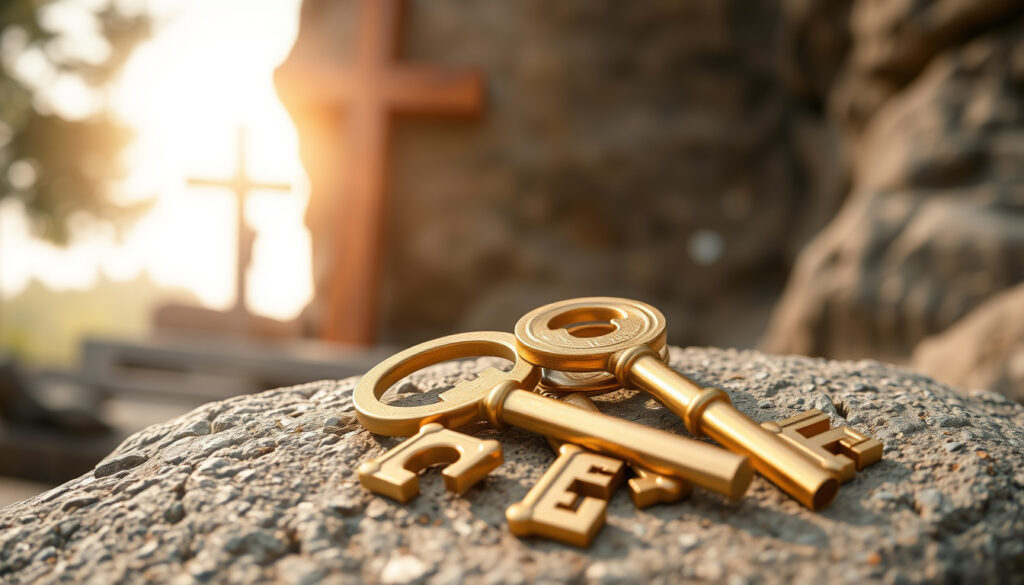
Saint Peter: Apostle, First Pope, and Martyr
Most people know St Peter as the fisherman who walked on water, but his real story is less about miracles and more about transformation — he stumbled, denied his teacher, and still became the rock on which a global faith was built. Here’s how his journey from Galilean fisherman to first Pope continues to shape Christianity today.
Known as: First Pope ·
Feast day: June 29 ·
Died: c. 64–68 AD ·
Symbol: Keys of Heaven ·
Patron of: Popes, fishermen, net makers
Quick snapshot
- One of the Twelve (Britannica)
- Witness to the Transfiguration (Britannica)
- Preached on Pentecost (Britannica)
- Considered first Bishop of Rome (Vatican News)
- Given the keys of the kingdom (Vatican News)
- Foundational role in Church (Vatican News)
- Crucified upside down (Britannica Summary)
- Died under Nero (Britannica Summary)
- Buried in Vatican City (Britannica Summary)
- Patron of fishermen (Catholic Encyclopedia)
- Patron of popes (Catholic Encyclopedia)
- Invoked for protection of the Church (Catholic Encyclopedia)
Peter, who denied Christ three times, is the same figure entrusted with the keys of heaven. That contradiction — failure turned into foundation — may be why his story still resonates with believers wrestling with their own flaws.
Here is a quick-reference table of St Peter’s key facts.
| Full name | Simon Peter (also Cephas) |
| Birthplace | Bethsaida, Galilee (Britannica Kids) |
| Death | c. 64–68 AD, Rome (Britannica) |
| Feast day | June 29 (with St. Paul) (Catholic Encyclopedia) |
| Symbol | Keys, upside-down cross, rooster |
| Patron of | Fishermen, net makers, popes, the Vatican |
This table collects the most commonly cited biographical data across Catholic and historical sources.
What is Saint Peter known for?
His role as an apostle
- Peter was one of the Twelve Apostles — the inner circle of Jesus — and appears more often in the Gospels than any other disciple (Britannica).
- He was a witness to the Transfiguration and present at the Garden of Gethsemane.
His position as first pope
- Catholic tradition holds that Jesus established St Peter as the first pope (Britannica).
- Roman Catholics count Peter as the first bishop of Rome and the first in an unbroken succession of popes (The Catholic Voice).
- This succession includes later popes such as Pope John Paul II: Biography, Legacy & Key Facts.
His martyrdom
- Peter was crucified upside down in Rome under Emperor Nero around 64 AD (Vatican News).
- He requested this inverted death because he felt unworthy to die in the same way as Jesus (Britannica Kids).
His symbols
- The crossed keys represent the keys of heaven given by Christ.
- The upside-down cross and the rooster (recalling Peter’s denial) are also iconic.
The implication: Peter’s role as both apostle and pope ties directly to the institutional authority of the modern papacy.
The papacy’s claim to apostolic succession rests entirely on Peter’s commission. Without that link, the lineage of every pope from St. Peter to Pope Francis collapses — making this single figure the fulcrum of Catholic institutional identity.
Why did Jesus love Peter so much?
Peter’s faith and confession
- At Caesarea Philippi, Peter declared Jesus as the Messiah — a confession that spurred Jesus to call him “the rock” (Vatican News).
- Jesus said: “You are Peter, and on this rock I will build my church” (Matthew 16:18).
Peter’s impulsive love
- Peter was the only disciple who stepped out of the boat to walk on water toward Jesus (Matthew 14:29).
- He also tried to defend Jesus by cutting off the ear of the high priest’s servant (John 18:10).
The restoration after denial
- After denying Jesus three times, Peter was restored when Jesus asked him three times, “Do you love me?” (John 21:15-17).
- The pattern: Peter’s three-fold denial met with a three-fold commission to “feed my sheep.”
The catch: Peter’s very human flaws make him a relatable model for those who struggle with faith.
What do you pray to St. Peter for?
Prayers for intercession
- Common prayers include the “Prayer to St Peter for Healing” and the “Keys of Heaven” prayer.
- St. Peter is invoked for protection of the Church (Catholic Encyclopedia).
Patronage of fishermen
- Because Peter was a fisherman, he is the patron saint of fishermen and net makers (Vatican News).
Prayers for the Church
- Petitions often ask for Peter’s intercession for unity, strength, and fidelity.
- Many Catholics pray to St. Peter for fortitude in times of persecution or doubt.
The pattern: Peter’s human experience makes him an accessible intercessor for ordinary believers.
What sin did Peter struggle with?
The denial of Jesus
- Peter denied knowing Jesus three times during the night of Jesus’ arrest (Matthew 26:69-75).
- He wept bitterly after the rooster crowed, realizing what he had done.
Impulsiveness and fear
- Peter often acted before thinking — walking on water then sinking, cutting off a servant’s ear, and rebuking Jesus.
- His fear led him to temporarily separate from Gentile believers in Antioch (Galatians 2:11-14).
Peter’s repentance
- Peter’s repentance was immediate and bitter, and Jesus personally restored him (Britannica Kids).
- The tradition holds that he never forgot the lesson; later writings emphasize humility and perseverance.
The implication: Peter’s moral struggles are part of why his story resonates across denominations.
Why was St Peter crucified?
Persecution under Nero
- Peter was martyred during the Neronian persecution after the Great Fire of Rome in 64 AD (Vatican News).
- He was executed in Nero’s Circus on Vatican Hill.
Peter’s request for upside-down crucifixion
- According to tradition, Peter asked to be crucified head downward because he felt unworthy to die like Jesus (Britannica Kids).
- Origen (second century) attested to this inverted form of execution (Catholic Encyclopedia).
His burial site
- His tomb is traditionally located under St. Peter’s Basilica in Vatican City (Vatican News).
- Excavations in the 20th century uncovered a first-century tomb consistent with the ancient tradition.
The pattern: Peter’s death sealed the link between his authority and the city of Rome.
Timeline signal
- c. 1 AD – Birth in Bethsaida (St Peter’s Leatherhead)
- c. 27 AD – Called by Jesus to be a disciple (Vatican News)
- c. 29 AD – Confession of Christ at Caesarea Philippi (Britannica)
- c. 30 AD – Denial of Jesus; crucifixion and resurrection (Gospels)
- c. 33 AD – Pentecost: first sermon, conversion of 3,000 (Acts 2:38)
- c. 44 AD – Imprisonment by Herod Agrippa I; miraculous escape (Acts 12)
- c. 50 AD – Council of Jerusalem (Britannica)
- c. 64–68 AD – Martyrdom in Rome by crucifixion upside down (The Catholic Voice)
Confirmed facts
- Peter was a historical apostle and leader of the early church (Britannica Summary)
- He was martyred in Rome under Nero (Vatican News)
- His tomb is traditionally located under St. Peter’s Basilica (Catholic Encyclopedia)
What’s unclear
- Exact year of his death (64–68 AD range)
- Whether he served as Bishop of Rome for 25 years
- Details of his early life and family
“You are Peter, and on this rock I will build my church.”
— Jesus (Matthew 16:18) as recorded in the Gospels
“Repent and be baptized, every one of you, in the name of Jesus Christ.”
— Peter (Acts 2:38)
“Through envy and jealousy, the greatest and most righteous pillars [Peter and Paul] were persecuted and contended to the death.”
— Clement of Rome (1 Clement 5)
Peter’s transformation from impulsive fisherman to foundational Church leader carries an unavoidable implication for modern Christianity: the institution that claims the highest authority was built on a man who started as an uneducated net-mender. For Catholics, that paradox reinforces the power of grace. For Protestants, it redirects attention to the person of Peter rather than the office. The trade-off between apostolic tradition and historical evidence forces every reader to decide where they stand.
Related reading: **Pope John Paul II: Biography, Legacy & Key Facts** · **Peter Dinklage: Biography, Net Worth, Diagnosis, Family & More**
vatican.va, en.wikipedia.org, britannica.com, britannica.com, catholic.org, youtube.com, st-peters-basilica-tickets.com
The article provides a detailed biography of Saint Peter, covering his life, his denial of Jesus, and his martyrdom.
Frequently asked questions
Was St. Peter married?
The Gospels mention Peter’s mother-in-law, indicating he was married (Britannica). The Catholic Church later mandated clerical celibacy, but Peter himself was clearly a married man.
Did Jesus ever forgive Peter?
Yes. Jesus restored Peter after the resurrection, asking him three times, “Do you love me?” (John 21:15-17). Peter’s forgiveness is a central theme in Christian theology.
When was St Peter born?
The exact year is unknown, but he was born in Bethsaida around 1 BC–1 AD.
When did St Peter die?
He died between 64 and 68 AD in Rome during Nero’s persecution (Britannica).
What is St Peter the patron saint of?
He is patron saint of fishermen, net makers, popes, and the Vatican City (Catholic Encyclopedia).
How did St Peter become the first pope?
Catholic tradition holds that Jesus gave Peter the “keys of the kingdom” and commissioned him to lead the Church (Matthew 16:18-19). This is interpreted as the founding of the papacy.
What is the story of St Peter walking on water?
In Matthew 14:22-33, Peter briefly walked on water toward Jesus but began to sink when he became afraid. Jesus caught him, rebuking his doubt. The story highlights faith and human weakness.
For believers wrestling with their own failures, Peter’s path is a clear map: stumble, repent, be restored, lead. For the Catholic Church, the keys he received remain the symbol of papal authority. For historians, the evidence of his life — fragmentary yet remarkably consistent — continues to anchor the scholarly debate about early Church origins. The choice: accept Peter as the rock, or see him as a legend. Either way, his story forces a decision.
More related posts
 Calcium Score Test – Results, Normal Ranges and Costs
 Weetbix Slice Recipe – Easy No-Bake Guide
 Paul Anthony Kelly: JFK Jr. Actor, Wife, and Prosthetic
 Steve Waugh: Career Stats, Feuds, and Life After Cricket
 Peter Sellers: Cause of Death, Inheritance, and Tragic Fate
 Ping Pong Table Buying Guide Ireland: Price & Tips
 The Family Next Door ABC: Plot, Cast, Episodes & Review
 Nathan Cleary: Salary, Relationship & Career Facts