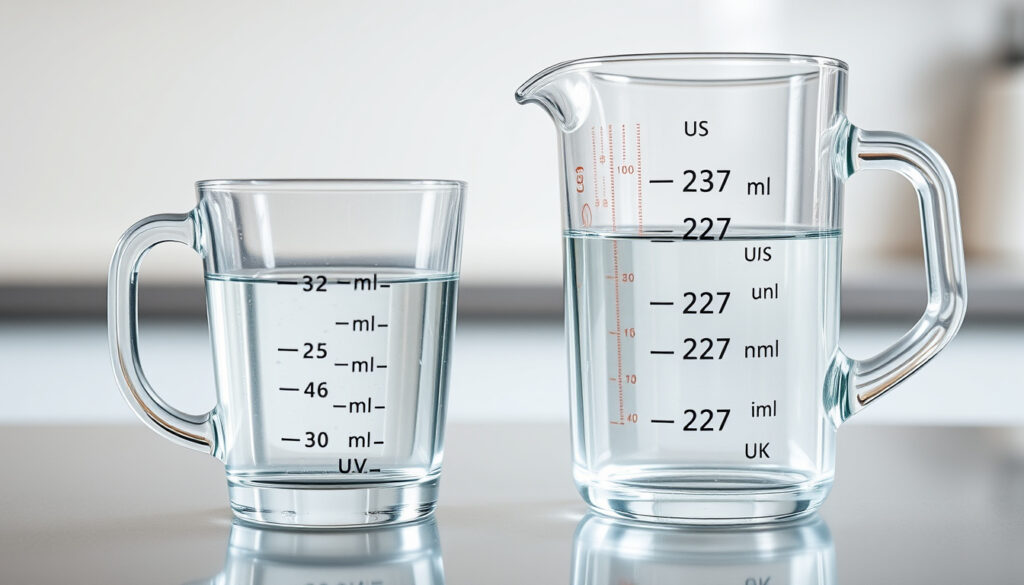
8 Ounces to ml – Exact US and UK Conversion Guide
Converting 8 ounces to milliliters is a common task in cooking, scientific work, and international trade. Many people encounter confusion when recipes or product labels use different measurement systems. The answer depends on which type of fluid ounce you are referencing, as US and UK measurements differ significantly.
This guide provides the exact conversion, explains common approximations, and clarifies the differences between measurement standards. Understanding these distinctions helps prevent errors in recipes, medication dosages, and commercial transactions.
How Many ml Is 8 oz Exactly?
8 US fluid ounces equals exactly 236.5882365 milliliters, commonly rounded to 236.59 ml for practical use. This conversion is based on the NIST standard, which defines 1 US fluid ounce as precisely 29.5735295625 ml. Multiplying this value by 8 produces the exact figure of 236.5882365 ml. The NIST Handbook 44 establishes this conversion for legal metrology and trade purposes.
The US fluid ounce measures volume, not weight. A fluid ounce of water happens to weigh approximately one ounce by mass, but this equivalence does not apply to other substances.
Quick Reference Overview
8 US fl oz = 236.59 ml
8 oz ≈ 240 ml (rounded)
8 imp fl oz ≈ 227.30 ml
Volume (fluid), not weight
Essential Conversion Insights
- 1 US fluid ounce = 29.5735 ml (precise value: 29.5735295625 ml per NIST standards)
- 8 oz = 1 US cup exactly in volume terms
- Rounding to 250 ml is common in metric countries but introduces measurable error
- Always specify “fluid oz” when referring to liquids
- Weight ounces (28.35g) differ completely from volume fluid ounces
- US and UK imperial ounces are not interchangeable
Conversion Table
| Measurement | US fl oz | ml (exact) | Common Approx |
|---|---|---|---|
| 1 oz | 1 | 29.57 | 30 |
| 8 oz | 8 | 236.59 | 240 |
| 12 oz | 12 | 354.88 | 355 |
| 16 oz (pint) | 16 | 473.18 | 473 |
| 33.81 fl oz | 33.81 | 1000 (1 liter) | 1000 |
Is 8 oz 240 ml or 250 ml? Common Approximations Explained
Neither 240 ml nor 250 ml is precisely correct for 8 US fluid ounces, though both appear frequently in recipes and everyday usage. The exact value of 236.59 ml gets rounded differently depending on context and regional preferences. In the United States, many recipes round 8 oz to 240 ml for simplicity, while European and international sources often use 250 ml as an approximation.
This discrepancy matters most in scientific and medical contexts where precision is essential. For cooking, the difference between 236 ml and 240 ml rarely affects the final result, but pharmaceutical and laboratory applications require the exact conversion. According to conversion calculations, the 250 ml figure is approximately 13.4 ml higher than the actual value.
240 ml is the standard approximation in US cooking contexts, while 250 ml appears more commonly in international and European recipes. Neither represents the true US measurement, but both fall within acceptable tolerance for culinary purposes.
Why These Numbers Appear
The 240 ml figure often appears because it divides evenly into metric measurements used in professional kitchens. A 250 ml approximation stems from the rough rule-of-thumb that 1 oz equals 30 ml, which yields 240 ml for 8 oz and gets rounded up to 250 ml in some contexts. These approximations persist because they provide close enough results for non-critical applications and simplify mental math.
When Precision Matters
In baking, precision often matters more than in general cooking. A cake recipe calling for 236.59 ml of liquid will produce noticeably different results if you use 250 ml instead. Similarly, cocktail recipes measured with precision instruments require accurate conversions. Medication dosages demand absolute accuracy, as even small deviations can have significant consequences.
How to Convert Ounces to ml (Step-by-Step)
The conversion process requires two key pieces of information: the type of fluid ounce you are converting and the appropriate conversion factor. US fluid ounces and UK imperial fluid ounces use different values, so identifying your source’s measurement system is the critical first step.
Step 1: Identify the Measurement Type
Determine whether you are working with US fluid ounces (29.5735 ml per ounce) or UK imperial fluid ounces (28.4131 ml per ounce). US measurements appear on most American products and recipes, while UK imperial ounces are used in the United Kingdom, Canada, and some Commonwealth countries. The difference of approximately 1.16 ml per ounce compounds significantly when multiplying.
Step 2: Apply the Conversion Formula
Multiply your fluid ounce value by the appropriate conversion factor. For 8 US ounces: 8 × 29.5735 = 236.588 ml, rounded to 236.59 ml. For 8 UK ounces: 8 × 28.4131 = 227.3048 ml, rounded to 227.30 ml. This conversion calculation can be performed on any calculator or through online tools.
Step 3: Reverse Conversion (ml to oz)
To convert milliliters back to fluid ounces, divide by the conversion factor. For 100 ml: 100 ÷ 29.5735 ≈ 3.38 US fluid ounces. For UK measurements: 100 ÷ 28.4131 ≈ 3.52 imperial fluid ounces. The formula remains consistent regardless of direction, provided you use the correct conversion factor for your measurement system.
Step 4: Related Unit Conversions
- 8 oz to liters: 236.59 ml = 0.2366 liters (divide ml by 1000)
- 8 oz to cups: 1 US cup = 8 fl oz, so 8 oz = 1 cup = 236.59 ml
- 1 oz to ml: 29.57 ml (US) or 28.41 ml (UK imperial)
8 oz to ml in Context: Water, Cooking, and More
When converting 8 oz of water specifically, the density remains approximately 1 gram per milliliter at standard room temperature and pressure. This means 8 fluid ounces of water weighs about 236.59 grams. However, this density equivalence applies only to water and similar liquids with comparable density. Liquids like oil, juice, or milk may have slightly different densities that affect weight-to-volume relationships.
In cooking applications, recipes may call for 8 oz of various ingredients, not all of which convert the same way. Eight ounces of flour occupies more volume than 8 oz of water, while 8 oz of honey occupies less. This is why recipes specify whether to measure by weight or volume when precision matters.
When a recipe specifies “8 oz” without qualification, it typically refers to volume for liquids and weight for dry ingredients. In the US, liquid measurements almost always mean fluid ounces, while dry measurements usually refer to weight ounces (avoirdupois).
International Recipe Adjustments
Adapting recipes between US and metric systems requires careful attention to which measurement system each ingredient uses. A recipe from the United States specifying 8 oz of liquid needs conversion to approximately 237 ml, while a UK recipe calling for 8 fl oz requires conversion to 227 ml. These regional differences can accumulate in recipes with multiple liquid ingredients.
US vs UK Fluid Ounces: Key Differences for 8 oz to ml
The distinction between US and UK imperial fluid ounces represents one of the most commonly overlooked sources of measurement error. While both systems share the term “fluid ounce,” they define the unit differently based on different gallon definitions established centuries ago.
Historical Origins
The US fluid ounce derives from the 1824 British Wine Gallon definition (231 cubic inches), which the US adopted after independence. The UK imperial system instead defined its gallon as 4.54609 liters, creating a different fluid ounce value. The imperial gallon contains 160 imperial fluid ounces, compared to the US gallon’s 128 fluid ounces.
Direct Comparison
For 8 fluid ounces, the difference between systems is 9.29 ml. Eight US fluid ounces equal 236.59 ml, while 8 UK imperial fluid ounces equal 227.30 ml. This 3.9% difference seems small but becomes significant in scientific measurements, medication dosing, and commercial trade.
| System | 1 fl oz (ml) | 8 fl oz (ml) | Gallon Definition |
|---|---|---|---|
| US Customary | 29.5735 | 236.59 | 231 cubic inches |
| UK Imperial | 28.4131 | 227.30 | 4.54609 liters |
1 oz to ml: Both Systems
One US fluid ounce converts to 29.5735 ml, while one UK imperial fluid ounce converts to 28.4131 ml. This difference of approximately 1.16 ml per ounce means conversions must specify which system applies. Common approximations often blur these distinctions, leading to confusion.
What We Know and What Remains Unclear
The conversion of 8 US fluid ounces to milliliters is definitively established: 236.5882365 ml according to NIST standards. This value has been standardized since the 1959 international agreement on yard and pound definitions. The conversion factor of 29.5735295625 ml per fluid ounce appears in official documentation for legal metrology.
Uncertainty arises primarily from three sources: confusion between US and UK fluid ounces, mixing up weight ounces with volume ounces, and using rounded approximations without understanding their limitations. The precise values are well-established; the confusion comes from inconsistent application.
| Established Information | Areas of Potential Confusion |
|---|---|
| 8 US fl oz = 236.5882365 ml (exact) | Whether a source uses US or UK definitions |
| 1 US fl oz = 29.5735295625 ml (NIST standard) | Whether “oz” refers to fluid or weight ounces |
| 8 UK imp fl oz = 227.3045 ml | The acceptable tolerance for rounding in specific contexts |
| Formula: ml = fl oz × conversion factor | How density affects volume measurements for non-water liquids |
Why These Conversions Matter
The fluid ounce to milliliter conversion serves critical functions across multiple domains. International trade in beverages, cosmetics, and pharmaceuticals requires consistent measurement standards. Recipe standardization across borders helps home cooks adapt dishes from different culinary traditions. Scientific research relies on precise volume measurements for experiments and reporting.
Errors in volume conversion can compound across industrial scales. A beverage manufacturer producing thousands of liters daily faces significant material waste or customer dissatisfaction if initial conversions are inaccurate. Medical professionals administering liquid medications must achieve precise dosing regardless of which measurement system a label uses.
Official Sources and Standards
The National Institute of Standards and Technology (NIST) Handbook 44 establishes the US fluid ounce as exactly 29.5735295625 milliliters. This definition derives from the US gallon of 231 cubic inches and serves as the legal standard for commerce in the United States.
— NIST Handbook 44, Appendix C
The international yard and pound agreement of 1959 standardized the relationship between imperial and metric units, establishing the conversion factors still in use today for both US customary and UK imperial measurements.
— Bureau International des Poids et Mesures (BIPM)
Summary
Converting 8 ounces to milliliters requires knowing whether you are working with US fluid ounces or UK imperial fluid ounces. Eight US fluid ounces equal 236.59 ml, while 8 UK imperial fluid ounces equal 227.30 ml. The NIST-defined conversion factor of 29.5735295625 ml per US fluid ounce provides the authoritative standard for precise calculations. Common approximations of 240 ml or 250 ml introduce small errors that matter in scientific and medical contexts but remain acceptable for most cooking applications. Understanding the difference between fluid ounces and weight ounces prevents one of the most common conversion mistakes.
For other measurement conversions, explore resources on standard deviation in data analysis or calculating dates for project planning.
Frequently Asked Questions
8 oz to liters?
Eight ounces converts to 0.2366 liters. Divide 236.59 ml by 1000 to get the liter value.
How many ml in 1 oz?
One US fluid ounce equals 29.57 ml (more precisely 29.5735295625 ml). One UK imperial fluid ounce equals 28.41 ml.
Is 8 oz the same as 1 cup?
Yes, in the US system, 1 cup equals exactly 8 fluid ounces, which is 236.59 ml. This equivalence is why recipes often reference “1 cup” interchangeably with “8 oz.”
Why is 250 ml sometimes used instead of 236 ml?
250 ml appears as an approximation because it provides a round number and simplifies recipe scaling. It is approximately 13.4 ml higher than the true US value, which matters for precision work but rarely affects cooking results.
What’s the difference between fluid ounces and weight ounces?
Fluid ounces measure volume of liquids, while weight ounces (avoirdupois ounces) measure mass. They are completely different systems. One fluid ounce of water weighs approximately one weight ounce, but this equivalence does not hold for other substances.
How do I convert ml back to ounces?
Divide the milliliter value by 29.5735 for US fluid ounces or by 28.4131 for UK imperial fluid ounces. For example, 100 ml ÷ 29.5735 ≈ 3.38 US oz.
Which countries use US fluid ounces vs imperial?
The United States uses US customary fluid ounces. The United Kingdom, Canada, and some other Commonwealth nations historically used imperial fluid ounces, though many have largely transitioned to metric measurements.
More related posts
 Flash Gordon: From 1934 Comic Strip to Cult Film
 Peking Duk: Members, Biggest Hits, and Name Origin Explained
 Tony Todd Cause of Death: Candyman Actor Dies at 69
 What’s On Sydney: Events, Costs & Hidden Spots 2025
 Garth Brooks 2025: Health Rumors, LGBTQ Comments, Net Worth
 Papua New Guinea: Safety, Crime, Economy Key Facts
 Lin-Manuel Miranda: Biography, Ethnicity, and Famous Songs
 Victor Harbor Caravan Park Prices, Maps & Pet Policy Guide