Correa Alba Growing Guide: How to Grow White Correa
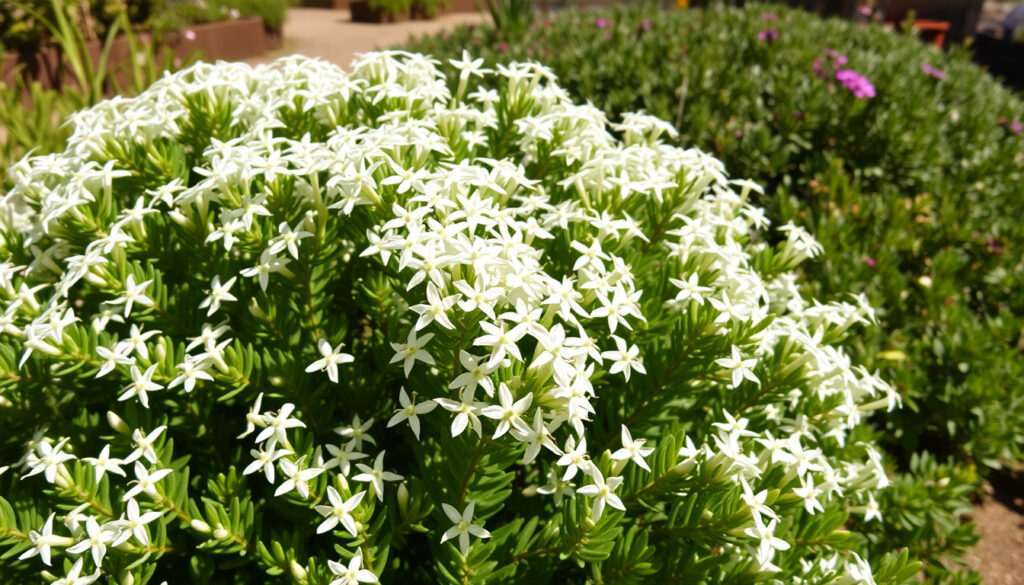
If you’ve ever watched a coastal heath shrub hold its own against salt-laden winds and sand, you’ve seen the kind of resilience that Correa alba brings to a garden. This compact Australian native, with soft white flowers and tough grey-green leaves, doesn’t just survive in exposed positions — it thrives there. This guide walks through how to grow and care for white correa, from planting through maintenance, with practical advice drawn from Australian horticultural sources.
Common names: White correa, Cape Barren tea, Botany Bay tea tree ·
Plant type: Compact evergreen shrub ·
Native range: South-eastern Australia ·
Flowering period: Late summer to early winter ·
Flower colour: White ·
Wildlife value: Attracts birds
Quick snapshot
- Endemic to coastal south-eastern Australia (ABC Gardening Australia)
- Flowers late summer to early winter (Gardenia)
- Frost and drought tolerant once established (Australian National Botanic Gardens)
- Highly resistant to salt spray (Plants and Landscapes)
- Exact height and spread vary by cultivar and local conditions (Australian Plants Society)
- Specific pest and disease occurrence is not consistently documented in nursery profiles (Australian Plants Society)
- Availability of named dwarf or prostrate forms varies by supplier and region (Australian Plants Society)
- Select a position with full sun to light shade and well-drained soil
- Plant in spring or autumn in mild coastal climates
- Water regularly through the first growing season
- Tip-prune after flowering to maintain a dense, rounded shape
Eleven details, one pattern: Correa alba is a low-fuss shrub that rewards good positioning and minimal intervention with reliable flowering and wildlife value.
Here is a quick reference of the shrub’s key attributes.
| Attribute | Detail |
|---|---|
| Botanical name | Correa alba |
| Common names | White correa, white fuchsia, Cape Barren tea, Botany Bay tea tree |
| Plant family | Rutaceae |
| Native range | South-eastern Australia |
| Habit | Dense, rounded evergreen shrub |
| Foliage | Thick, oval to rounded grey-green leaves |
| Flowering season | Late summer to early winter |
| Flower colour | White |
| Typical height | About 1.5 m |
| Typical spread | About 1.5–2 m |
| Wildlife value | Birds |
How do I grow Correa alba?
Choose the right position
- Full sun to light shade delivers the best growth and flower production (Gardenia)
- Flowering is noticeably heavier in sun than in shade (ABC Gardening Australia)
- Well-drained soil is non-negotiable; heavy water-holding clay is unsuitable (ABC Gardening Australia)
- Sandy or loamy soils are ideal (Gardenia)
The catch: the same traits that make it tough in coastal headlands — deep roots, modest nutrient needs, tolerance for lean soil — also mean it will sulk in a boggy garden bed. Drainage is the single make-or-break factor.
Planting in garden beds
- Spring is the recommended planting window; autumn also works in mild coastal climates (Gardenia)
- Dig a hole roughly twice the width of the container and at the same depth
- Backfill with the original soil — no need for rich amendments
- Apply a coarse mulch such as gravel or composted bark around the root zone, keeping it clear of the main stem (Gardenia)
The City of Melbourne notes that Correa alba can become “very vigorous” in moist, fertile sites, requiring irregular pruning to maintain form (City of Melbourne). A modest site — not too rich, not too wet — keeps the shrub naturally compact.
First-season watering
- Water regularly during the first growing season to establish a deep root system (Gardenia)
- Once established, water deeply but less often — the shrub is drought tolerant (Australian National Botanic Gardens)
- Overwatering in heavy soil is a faster killer than underwatering
The implication: treat the first year as the only high-attention period. After that, Correa alba largely looks after itself.
Can Correa alba grow in shade?
Light tolerance
- Correa alba grows in partial shade as well as full sun (Gardenia)
- Dense shade reduces flowering and produces a looser, more open habit (ABC Gardening Australia)
- In hot inland gardens, light afternoon shade can be beneficial
Coastal garden performance
- Open coastal positions suit the species because it tolerates wind and salt-laden air (Plants and Landscapes)
- The same tolerance makes it a strong candidate for exposed seaside plantings
Why this matters: full sun is optimal, but the shrub’s flexibility means it can fill a semi-shaded spot that would defeat less adaptable plants. The trade-off is fewer flowers.
Is Correa alba fast growing?
Expected height and spread
- Mature height is roughly 1.5 m with a similar or slightly wider spread of 1.5–2 m (Australian National Botanic Gardens)
- Dwarf and prostrate forms are available for lower plantings, though availability varies by supplier
- It is usually described as a compact shrub, not a rapid grower (Australian Plants Society)
What affects growth rate
- Soil quality, moisture availability, sun exposure, and pruning all influence how quickly it fills out
- In moist, fertile sites it can become more vigorous, requiring occasional pruning to keep shape (City of Melbourne)
- In lean coastal soils growth is slower but the plant remains dense and compact
The pattern: this is a shrub that sets a steady, manageable pace — not a fast filler, but one that earns its space with longevity and low upkeep.
How do you maintain correas?
Light pruning
- Tip-prune after the main flowering period to keep a rounded, dense shape (Gardenia)
- The Australian Plants Society recommends pruning after flowering to encourage a denser plant (Australian Plants Society)
- Avoid cutting back into old, leafless wood — new growth may not emerge
- In vigorous sites, irregular pruning may be needed to maintain density and form (City of Melbourne)
Feeding and mulching
- Use a low-phosphorus native fertiliser if feeding is needed; heavy fertiliser should be avoided (Gardenia)
- A thin layer of coarse mulch, gravel, leaf mould, or composted bark can be applied around the root zone (Gardenia)
- Keep mulch away from the main stem to reduce the risk of collar rot
The Australian Plants Society describes Correa alba as “usually hardy once established” and needing “little maintenance” (Australian Plants Society). The maintenance window is small: a quick prune once a year, a light feed if the soil is poor, and the plant does the rest.
The implication: the less you fuss, the better it performs. Over-care — too much water, too much fertiliser, too much pruning — creates more problems than neglect.
What problems affect Correa alba?
Root health and drainage
- Poorly drained or wet soil is the main cultural risk for Correa alba (ABC Gardening Australia)
- The City of Melbourne notes the shrub can be susceptible to collar rot, especially in poorly drained positions (City of Melbourne)
- Root rot is more likely in heavy clay or in containers without adequate drainage
Pest and disease reduction
- Scale and sooty mould can appear on stressed or damaged plants
- Young plants can reportedly be damaged by slugs and snails (City of Melbourne)
- Good airflow, light pruning, and well-drained soil reduce most common problems
The trade-off: the shrub’s natural hardiness means serious problems are rare — and almost always traceable to a drainage or overwatering issue that can be corrected before planting.
Can Correa be grown in pots?
Choosing a pot and mix
- Correa alba can grow in a container with enough room for its roots (Gardenia)
- Use a pot with drainage holes and a free-draining native potting mix
- A container at least 30–40 cm wide gives the root system adequate space
Care for potted Correa
- Potted plants need more frequent watering than plants in the garden, especially in summer
- Place the pot in a sunny or lightly shaded position after planting
- Feed with a low-phosphorus native fertiliser in spring
- Repot every 2–3 years or refresh the top layer of potting mix
The catch: container growing demands more vigilance with watering and drainage than in-ground planting, but it allows gardeners with limited space or challenging soil to enjoy the species.
Six questions, one pattern: Correa alba is remarkably forgiving of most conditions except poor drainage. Get that right, and the rest is straightforward.
Seven care specifications, one pattern: every number points to a plant that asks for very little and gives back dependable structure and seasonal flowers.
A summary of the shrub’s growing requirements.
| Specification | Detail |
|---|---|
| Sun exposure | Full sun to partial shade |
| Soil type | Sandy, loamy, well-drained |
| Soil pH | Acid to alkaline; tolerates alkalinity (City of Melbourne) |
| Water needs | Low once established |
| Frost tolerance | Yes, once established (Australian National Botanic Gardens) |
| Drought tolerance | Yes, once established (Australian National Botanic Gardens) |
| Salt tolerance | High — very resistant to salt spray (Plants and Landscapes) |
| Pruning time | After main flowering period |
| Fertiliser type | Low-phosphorus native, light application |
| Typical height | ~1.5 m |
| Typical spread | ~1.5–2 m |
| Flowering season | Late summer to early winter |
Step-by-step: planting Correa alba
- Choose the position — full sun to light shade, with well-drained soil. Avoid low spots where water collects.
- Prepare the soil — if drainage is marginal, raise the bed or mix in coarse sand or gravel. No need for rich compost.
- Dig the hole — roughly twice the width of the container and at the same depth. Rough up the sides if the soil is compacted.
- Remove the plant from its pot — gently loosen any circling roots. Place it in the hole at the same depth it was growing.
- Backfill — use the original soil, firming lightly as you go. Do not add fertiliser at planting time.
- Water in — give a deep soak immediately after planting. This settles the soil and removes air pockets.
- Mulch — apply a 5–7 cm layer of coarse mulch or gravel around the root zone, keeping it away from the stem.
- First-season watering — water regularly through the first growing season, letting the soil dry slightly between waterings.
Timeline
- Late summer to early winter: Main flowering period for Correa alba. The shrub produces white star-shaped flowers that attract birds.
- After main flowering: Prune lightly to shape the shrub. Tip-pruning keeps the plant dense and encourages a compact habit (Australian Plants Society).
- First year after planting: Water regularly to establish the root system. Once established, the shrub is drought tolerant and needs only occasional deep watering.
What we know and what we don’t
Confirmed facts
- Correa alba is endemic to south-eastern Australia, particularly coastal areas of New South Wales, Victoria, and Tasmania (ABC Gardening Australia).
- It is a compact evergreen shrub with white flowers that appear from late summer to early winter (Gardenia).
- It is well suited to coastal gardens, tolerates salt spray, and is described as low-maintenance (Plants and Landscapes).
- It is frost and drought tolerant once established (Australian National Botanic Gardens).
What’s unclear
- Exact height and spread vary by cultivar and growing conditions; reported ranges are approximate.
- Specific pest and disease occurrence is not consistently documented across nursery and horticultural sources.
- Availability of named dwarf or prostrate forms varies by supplier and region in Australia.
- Long-term performance in heavy shade is not well documented beyond anecdotal observations.
What the experts say
“Correa alba is a coastal plant native to Australia, especially coastal areas of New South Wales, Victoria, and Tasmania.”
— ABC Gardening Australia (ABC Gardening Australia)
“Correa alba is a compact evergreen shrub suited to open, sunny or lightly shaded positions. It is very resistant to salt spray.”
— Australian Plants Society (Australian Plants Society)
“Correa alba is usually hardy once established and needs little maintenance. It flowers for a long period from late summer to early winter.”
— Australian Plants Online (Australian Plants Society)
“Correa alba can become very vigorous in moist, fertile sites and may need irregular pruning to maintain density and form. It can be susceptible to collar rot.”
— City of Melbourne (City of Melbourne)
For Australian gardeners, especially those in coastal regions, the choice is clear: Correa alba offers a dependable, low-input evergreen that delivers winter flowers and bird habitat with minimal fuss. The only real risk is giving it too much attention — and that’s a problem most gardeners can live without.
ultimatebackyard.com.au, theillawarraflame.com.au, en.wikipedia.org, indigigrow.com.au, nicksnatives.com, soilhealth.ccmaknowledgebase.vic.gov.au
Frequently asked questions
Are correas hardy?
Yes. Once established, Correa alba is frost and drought tolerant and requires very little maintenance (Australian National Botanic Gardens).
Is Correa alba easy to grow?
Yes. It adapts to a range of soil types as long as drainage is good, and it needs minimal watering after the first year (ABC Gardening Australia).
Can Correa alba be used as a hedge?
Yes. Its dense, rounded habit and tolerance of pruning make it suitable for a low, informal hedge or border (Gardenia).
Are there dwarf or prostrate forms of Correa alba?
Yes, though availability varies by supplier. Dwarf and prostrate forms are suitable for lower plantings and groundcover.
Does Correa alba attract birds?
Yes. The white flowers provide a nectar source for birds, particularly during the cooler months when other food is scarce.
How long does Correa alba flower?
The main flowering period extends from late summer through to early winter, providing several months of blooms (Gardenia).
Is Correa alba good for coastal gardens?
Yes. It is highly resistant to salt spray and wind, making it an excellent choice for seaside plantings (Plants and Landscapes).
Related reading: Mal Leyland’s last trip: dementia, cancer, and brother fallout · Ken Hinkley becomes Tasmania Devils inaugural head coach
More related posts
 Lorde Album Cover – Virgin X-Ray Explained and Reactions
 Pauly Shore: Biography, Health Update, Net Worth & Movies
 Steve Waugh: Career Stats, Feuds, and Life After Cricket
 Super Storm Warning QLD Today: Live Updates & Safety
 James Brayshaw: Biography, Cricket, Media, and Family
 Russell 2000 Index – Complete Guide to Small-Cap Benchmark
 Cradle Mountain Weather: Snow, Temperature & Best Time to Visit
 Vicar of Dibley: Surviving Cast, Deaths, Location Guide