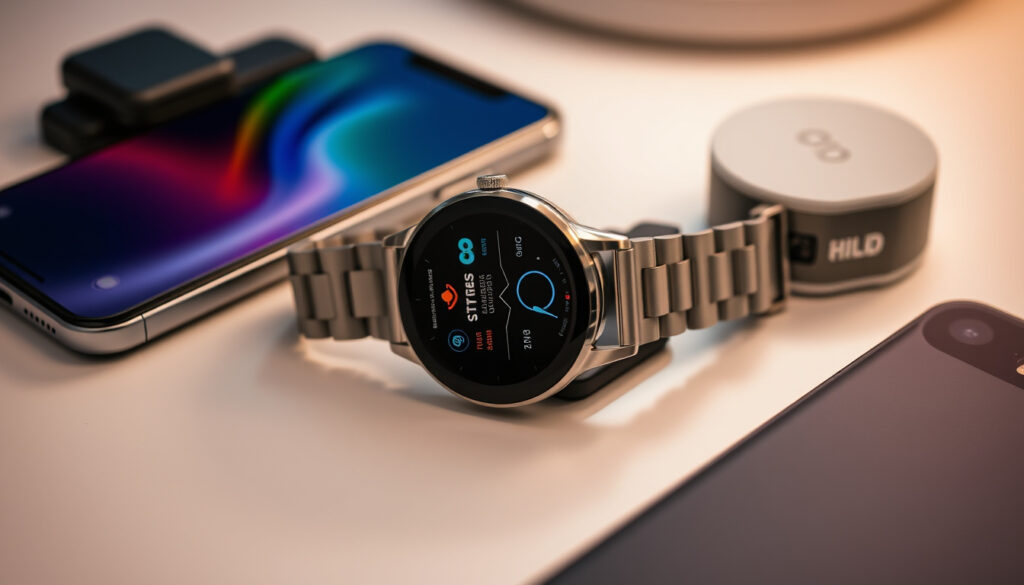
Smart Watch Buying Guide 2026: Best Picks, Features & Tips
A smartwatch can feel like a big decision, especially when the shelves are stacked with options from Currys to Harvey Norman. Whether you are chasing better fitness tracking or just want fewer phone glances, the right pick depends more on your phone than your wrist size — this guide cuts through the spec sheets and brand hype to help you find the smart watch that actually fits your life in 2026.
Global smartwatch market value (2024): Approximately $30 billion · Apple watchOS market share (Q3 2023): Approximately 35% · Average smartwatch price range: $100 – $500 for mid-range · Battery life benchmark for budget models: Often 7-14 days · Top reason people cite for buying a smartwatch: Health and fitness tracking
Quick snapshot
- Apple Watch works only with iPhone (TechRadar (wearables reviewer))
- Budget smartwatches often lack built-in GPS (Android Authority (tech publication))
- Premium watches typically last 1–2 days on a charge (TechAdvisor (buying guide))
- Precise battery life varies heavily by usage and model
- Long-term durability of budget models is hard to generalise
- No major timeline trends identified — market is mature
- Ecosystem lock-in will deepen; choose your phone first
The key specs across popular models reveal the price-to-feature trade-offs at a glance.
| Fact | Value |
|---|---|
| Apple Watch Series 9 Price (approx.) | €400 – €500 |
| Samsung Galaxy Watch 6 Price | €300 – €400 |
| Garmin Forerunner 265 Price | €450 – €500 |
| Amazfit Bip 5 Price | Under €100 |
| Average smartwatch battery life | 1–2 days (full-featured) |
| Average budget smartwatch battery life | 7–14 days |
What is the best smart watch to buy?
Top 5 Smartwatches in 2026
- Apple Watch Series 9 / Ultra 2 — the top overall pick for iPhone users. “It remains the best smartwatch for iPhone users, but the battery life is a sticking point for many,” notes a review from TechRadar (wearables reviewer).
- Samsung Galaxy Watch 6 — the best for Android users, confirmed by TechAdvisor (buying guide).
- Garmin Forerunner 265 — best for serious runners, with advanced training metrics and superior GPS accuracy (TechRadar).
- Amazfit Bip 5 / Xiaomi Redmi Watch 4 — budget leaders with long battery life (10+ days) and basic health tracking (Android Authority (tech publication)).
- Garmin Fenix 8 — a cross‑platform option that works with iPhone or Android (refurbed.ie (refurbished tech marketplace)).
Luxury vs. Budget: Making the Choice
The smartwatch market in 2026 includes strong premium options, budget options, and fitness‑first options rather than a single best device for everyone (Android Authority). A quick comparison shows the trade‑off:
Five models, one pattern: the higher the price, the tighter the ecosystem tie.
| Model | Ecosystem Compatible | Battery Life | Price (approx.) |
|---|---|---|---|
| Apple Watch Series 9 | iOS only | ~18hr–1 day | €400–€500 |
| Samsung Galaxy Watch 6 | Android (best with Samsung) | ~1‑2 days | €300–€400 |
| Garmin Forerunner 265 | iOS & Android | ~13 days | €450–€500 |
| Amazfit Bip 5 | iOS & Android | ~14 days | Under €100 |
The pattern: iPhone users get the richest experience from Apple Watch; Android users have strong choices on Wear OS. Fitness‑focused buyers sacrifice some smart features for battery life. Budget shoppers trade app ecosystems and sensor accuracy for affordability and longer charge intervals.
How do I choose a smartwatch?
Key Features to Prioritize
- Check phone OS: watchOS only works with iPhone (TechRadar).
- Determine primary need: fitness, style, or notifications. Garmin‑style watches are better for serious fitness enthusiasts who value advanced training metrics and longer battery life (TechRadar).
- Consider battery life: 1–2 days for full‑featured, 7+ for basic. A smartwatch’s battery claim on the box should be treated as a ceiling, because real‑world battery life usually drops with GPS and always‑on display use (refurbed.ie).
Steps to Choose Your Smartwatch
- Identify your phone’s operating system — watchOS works only with iPhone, Wear OS with Android.
- Define your primary use case: fitness tracking, notifications, or style.
- Set a budget and compare battery life expectations across models.
- Check for built-in GPS and NFC payments if you want phone-free tracking and tap-to-pay.
- Read reviews from trusted sources and verify compatibility with your daily routine.
Compatibility with Your Phone
The first question in choosing a smartwatch is whether it is compatible with the phone you already use (TechRadar). Apple Watch is the natural first choice for iPhone users who want seamless integration and third‑party apps. For Android users, Wear OS smartwatches are generally the first choice (TechAdvisor).
Battery Life and Charging
Fitness‑focused watches often trade some communication features and third‑party apps for longer battery life and more advanced fitness tracking (TechRadar). If you hate daily charging, a Garmin or Amazfit will save you from “battery anxiety”.
Some buyers should think in terms of a three‑ to four‑year ownership cycle rather than only the launch‑year features (BKWAT (smartwatch blog)). A model one or two generations old is often enough for steps, heart rate, notifications, and sleep at a lower price (refurbed.ie).
What are the features of a smart watch?
Health and Fitness Monitoring
- Heart rate, sleep, and step tracking are standard (AIGadgetech (tech blog)).
- Built‑in GPS is common in mid‑to‑high‑end models. A buyer should check whether the device has onboard GPS rather than only connected GPS if they want tracking without carrying a phone (Android Authority).
Notifications and Connectivity
Most receive call/text/app notifications (AIGadgetech). Notification handling is considered one of the core smartwatch functions alongside health tracking and payments (Android Authority).
Built-in GPS and Payment Options
Digital payment support is commonly included because many users want tap‑to‑pay on the wrist (Android Authority). NFC for contactless payments is a premium feature, present on most watches over €200.
Many budget watches omit NFC payments and always‑on‑display. You are trading convenience for lower price and longer battery life.
The implication: Core features are now standard across most price points. The differentiators are GPS accuracy, payment support, and display quality. Choose based on which of those you cannot live without.
Is it worth buying a cheap smart watch?
Pros of Budget Smartwatches
- Cheap watches ($50–150) offer basic fitness tracking and long battery life (7–14 days).
- Ideal for casual users or first‑time buyers who want to test the smartwatch experience without a large investment. Brands like Amazfit, Xiaomi, and Fitbit (Versa/Versa Lite) are reliable budget picks (Android Authority).
Cons of Budget Smartwatches
- They often lack app ecosystems, detailed health sensors, and build quality (Android Authority).
- Budget smartwatches often lack built‑in GPS (Android Authority).
Best Budget Brands
The table below shows how the leading budget brands compare on price and standout features.
| Brand | Model Example | Price | Key Feature |
|---|---|---|---|
| Amazfit | Bip 5 | Under €100 | 14‑day battery, basic health tracking |
| Xiaomi | Redmi Watch 4 | Under €100 | AMOLED display, 10‑day battery |
| Fitbit | Versa Lite | ~€150 | Accurate step/sleep tracking |
The trade‑off: A cheap smartwatch is a good entry point, but you give up app ecosystem depth and sensor accuracy. For fitness‑only goals, it is fine. For notifications, payments, and seamless phone integration, spend more.
Why are people ditching smart watches?
Battery Anxiety and Short Lifespan
Short battery life (daily charging) is a top complaint. Many users report that battery anxiety drives them away from full‑featured models (TechAdvisor).
Unnecessary Complexity
Notification overload leads to stress. Some users prefer the style of traditional watches and switch to simple fitness bands (Whoop, Fitbit Inspire) (Wareable (wearables specialist)).
Return to Analog or Basic Trackers
“I switched from an Apple Watch to a Garmin for battery life and have no regrets.” — Consumer feedback on Reddit r/smartwatch
“The smartwatch market continues to see growth driven by health features, but price sensitivity remains high.” — IDC (International Data Corporation) analyst
“It remains the best smartwatch for iPhone users, but the battery life is a sticking point for many.” — TechRadar review
What this means: The “smartwatch backlash” is real. Buyers are voting with their wrists — moving to longer‑battery fitness trackers or returning to analog. For Irish shoppers, this means thinking hard about whether you actually need a full smartwatch or just a solid activity band.
Upsides
- Rich app ecosystem (Apple, Wear OS)
- Advanced health sensors (ECG, SpO2)
- Built‑in GPS and NFC payments
- Seamless phone integration
Downsides
- Daily charging required on premium models
- High upfront cost (€300+)
- Ecosystem lock‑in (Apple/Android)
- Notification overload can increase stress
Summary
The smartwatch market in 2026 is split between ecosystem‑first devices (Apple, Samsung, Google) and fitness‑first devices (Garmin, Amazfit). The right choice comes down to your phone and your tolerance for charging. For Irish buyers browsing Harvey Norman or Currys, the decision is straightforward: if you own an iPhone, the Apple Watch is the best integrated option. If you use Android, a Wear OS device or a Garmin will serve you better. And if you are on a budget, Amazfit or Xiaomi give you the essentials at a fraction of the cost. For Irish shoppers, the choice is clear: pick your ecosystem first, then choose the trade‑off that matches your daily routine — or stick with a simple fitness tracker and keep your wrist classic.
Frequently asked questions
Can a cheap smart watch track sleep accurately?
Basic sleep tracking (duration, light/deep phases) is common on budget models, but accuracy is lower than premium devices with dedicated sensors. For general trends, it is fine; for clinical accuracy, spend more.
Is a smart watch waterproof?
Most smartwatches are water‑resistant (usually 5 ATM, good for swimming). Always check the IP or ATM rating — cheap models may only be splash‑proof.
Do I need a cellular smart watch?
Only if you want calls, texts, and data without your phone nearby. Cellular adds cost and reduces battery life. Most people are fine with Bluetooth connection to their phone.
How often should I charge my smart watch?
Premium models (Apple, Wear OS) need daily charging; budget and fitness‑first models (Amazfit, Garmin) last 7–14 days. Charging habits should match your lifestyle.
Can a smart watch work without a phone?
Some models with cellular and GPS can operate independently for certain tasks (music, calls, GPS tracking). But setup and most features require a phone.
More related posts
 Oliver Stark: Relationship, Birthmark, and Bio
 Demon Slayer: Infinity Castle Release, Streaming & Tickets 2025
 Queen Bed Size Australia: Dimensions in CM and Comparison Guide
 Bradley James 2025: Current Life, Career & Updates
 Allianz Public Liability Insurance: Coverage & Claims Guide
 Network Speed Test: Free Tools & Guides for Ireland Broadband
 Vince Gilligan: Net Worth, Next Series & Breaking Bad Trivia
 Garth Brooks 2025: Health Rumors, LGBTQ Comments, Net Worth