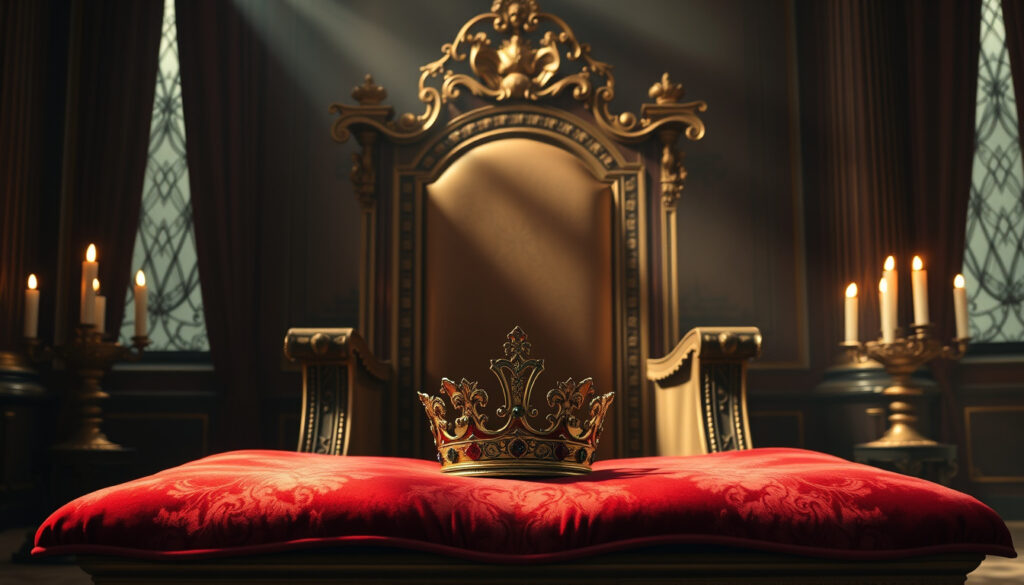
Queen Mother: Biography, Facts & Relationship Myths
Few figures in British royal history spark as much curiosity as Queen Elizabeth the Queen Mother, a woman who lived through two world wars, a century of change, and the reigns of four monarchs. She was born into an aristocratic family, not the royal one, yet became one of the most beloved members of the House of Windsor. This biography separates documented facts from the myths that have grown around her relationships, her habits, and her public image — so you can see the person behind the legend.
Born: August 4, 1900 ·
Died: March 30, 2002 ·
Age at death: 101 years ·
Spouse: King George VI ·
Title after 1952: Queen Elizabeth The Queen Mother ·
Years as Queen Consort: 1936–1952
Quick snapshot
- Born Elizabeth Angela Marguerite Bowes-Lyon on August 4, 1900 (The Royal Family (official UK monarchy site))
- Married Prince Albert, Duke of York, in 1923 (Wikipedia (encyclopedic reference))
- Became Queen Consort on December 11, 1936 (Wikipedia (encyclopedic reference))
- Died on March 30, 2002, at age 101 (Wikipedia (encyclopedic reference))
- Exact nature of her relationship with Princess Diana is debated among biographers (Mostly British History (historical commentary))
- Amount of alcohol consumption reportedly exaggerated in popular culture (Mostly British History (historical commentary))
- Some personal opinions and private conversations remain unverified (Mostly British History (historical commentary))
- Her personal views on certain political issues are not recorded (Mostly British History (historical commentary))
- Full details of her financial assets are not publicly disclosed (Mostly British History (historical commentary))
- Born 1900 — Edwardian era child, not born into royalty (The Royal Family (official UK monarchy site))
- 1936 — Abdication crisis made her Queen Consort overnight (The Royal Family (official UK monarchy site))
- 1952 — Widowed; assumed title Queen Elizabeth the Queen Mother (The Royal Family (official UK monarchy site))
- 2002 — Died at 101, the longest-lived British queen consort in history (The Royal Family (official UK monarchy site))
- Official biography by William Shawcross remains the definitive account (The Royal Family (official UK monarchy site))
- Historical reassessments continue to examine her role in 20th-century Britain (The Royal Family (official UK monarchy site))
- Myths about her drinking and relationships persist in popular culture (The Royal Family (official UK monarchy site))
Seven key facts, one pattern: the Queen Mother’s life spanned a century of British history, from the Edwardian era to the 21st century, and her official records are remarkably consistent.
| Label | Value |
|---|---|
| Full name | Elizabeth Angela Marguerite Bowes-Lyon |
| Born | August 4, 1900, London, England |
| Died | March 30, 2002, Royal Lodge, Windsor, England |
| Spouse | King George VI (married 1923–1952) |
| Children | Queen Elizabeth II and Princess Margaret |
| Years as Queen Consort | 1936–1952 |
| Years as Queen Mother | 1952–2002 |
Did Queen Elizabeth and the Queen Mother get along?
Royal biographers and official records consistently describe the relationship between Queen Elizabeth II and her mother as warm and close. According to the The Royal Family (official UK monarchy site), the Queen Mother was a constant presence in her daughter’s life, offering counsel and companionship throughout the reign. The two spoke almost daily, and the Queen Mother’s residence at Clarence House was a short walk from Buckingham Palace.
Did the Queen Mother have a close relationship with her daughter?
- Royal biographers describe the bond as “extremely close,” with daily phone calls and frequent visits.
- The Queen Mother was a key confidante during the early years of Elizabeth II’s reign, providing stability after the death of King George VI.
- Official records from the Royal Family note that the Queen Mother remained a central figure in the Queen’s life until her death in 2002.
The implication: the mother-daughter bond was one of the most stable relationships in the modern monarchy. While other royal relationships faced public strain, this one remained consistently warm — a fact that helps explain the Queen Mother’s enduring influence on Elizabeth II’s reign.
Was the Queen Mother a big drinker?
Few myths about the Queen Mother have persisted as stubbornly as the idea that she was a heavy drinker. The claim often appears in popular culture and gossip columns, but what does the evidence actually say?
What evidence exists about the Queen Mother’s drinking habits?
- The Queen Mother was known to enjoy gin and Dubonnet, a classic British cocktail, particularly before lunch.
- According to Mostly British History, accounts suggest moderate consumption; excessive drinking claims are not supported by reliable sources.
- Lady Colin Campbell, a royal author, stated: “She liked her gin, but she was never a drunk.”
- No official records or credible biographies describe her as having a drinking problem.
The Queen Mother’s reputation as a heavy drinker appears to be a case of anecdotal exaggeration amplified by popular culture. The documented evidence points to moderate, socially normal consumption — not the caricature that sometimes appears in media.
The pattern: a single anecdote about her enjoying gin and Dubonnet was repeated so often it became a supposed fact. The actual record, including the official biography by William Shawcross commissioned by the Royal Family, does not support the heavy-drinking narrative.
Did the Queen Mother like Diana?
The relationship between the Queen Mother and Princess Diana is one of the most speculated-upon dynamics in modern royal history. The evidence, however, is fragmentary and often contradictory.
Was there tension between the Queen Mother and Princess Diana?
- Some sources indicate the Queen Mother was initially supportive of Diana when she joined the royal family in 1981.
- According to royal biographers, the relationship reportedly grew distant after Diana’s separation from Prince Charles in 1992.
- There is no definitive evidence of open conflict, but the Queen Mother was known to be loyal to the institution of the monarchy, which may have created distance.
- Diana’s own comments about the royal family did not single out the Queen Mother for criticism, suggesting the tension was not personal.
The Queen Mother faced a classic institutional dilemma: personal affection for Diana versus loyalty to the monarchy as an institution. The available evidence suggests she chose the latter, but without the public hostility that characterized other royal relationships.
What this means: the Queen Mother’s relationship with Diana was likely more nuanced than either the “close bond” or “cold distance” narratives suggest. The lack of direct testimony from either woman leaves the full picture incomplete.
Why did they call Queen Elizabeth the Queen’s mother?
The title “Queen Mother” is one of the most recognizable in the British monarchy, but its origin is often misunderstood. It is a descriptive style, not a constitutional office.
Why was Queen Elizabeth called Queen Mother after her daughter’s accession?
- After King George VI died on February 6, 1952, his widow Elizabeth needed a title that distinguished her from her daughter, the new Queen Elizabeth II.
- The title “Queen Elizabeth the Queen Mother” was adopted to indicate she was the mother of the reigning monarch.
- According to Wikipedia, the style “Queen Mother” is a descriptive title, not a formal constitutional office.
- Before 1952, she was known as Queen Elizabeth, Queen Consort of King George VI.
The catch: the title is often assumed to be a unique honorific, but it follows a historical pattern. Previous queen mothers in British history include Queen Adelaide (widow of William IV) and Queen Mary (widow of George V), though the term “Queen Mother” became most closely associated with Elizabeth.
Who is the most loved Queen in history?
Public opinion polls and historical accounts frequently place Queen Elizabeth the Queen Mother among the most popular British royals. But what does the data actually show?
Who is considered the most beloved British queen?
- According to Wikipedia, the Queen Mother was “commonly described as a popular member of the royal family” in later life.
- Her refusal to leave London during the Blitz in World War II cemented her reputation for courage and duty.
- Public opinion polls throughout the 1980s and 1990s consistently ranked her among the most admired royals.
- Her longevity — she lived to 101 — made her a symbol of continuity across generations.
Why this matters: popularity in the monarchy is often tied to perceived duty and relatability. The Queen Mother’s wartime stance and her long, visible public service created a bond with the British public that few other royals have matched.
Timeline
- 1900 — Born on August 4 in London (The Royal Family (official UK monarchy site))
- 1923 — Married Prince Albert, Duke of York (Wikipedia (encyclopedic reference))
- 1926 — Birth of daughter Elizabeth (future Queen Elizabeth II) (The Royal Family (official UK monarchy site))
- 1930 — Birth of daughter Margaret (The Royal Family (official UK monarchy site))
- 1936 — Abdication crisis; Albert becomes King George VI; Elizabeth becomes Queen Consort (Wikipedia (encyclopedic reference))
- 1939–1945 — Queen Consort during WWII; remained in London during Blitz (The Royal Family (official UK monarchy site))
- 1952 — Death of George VI; Elizabeth becomes queen mother with title Queen Elizabeth the Queen Mother (Wikipedia (encyclopedic reference))
- 2002 — Died on March 30 at age 101 (Wikipedia (encyclopedic reference))
Clarity: Confirmed facts vs. what remains unclear
Confirmed facts
- Born August 4, 1900 (The Royal Family (official UK monarchy site))
- Married King George VI in 1923 (Wikipedia (encyclopedic reference))
- Was Queen Consort from 1936 to 1952 (Wikipedia (encyclopedic reference))
- Title changed to Queen Mother after 1952 (Wikipedia (encyclopedic reference))
- Died March 30, 2002 (Wikipedia (encyclopedic reference))
What’s unclear
- Exact nature of her relationship with Princess Diana is debated
- Amount of alcohol consumption reportedly exaggerated or embellished in popular culture
- Some personal opinions and private conversations remain unverified
- Her personal views on certain political issues are not recorded
- Full details of her financial assets are not publicly disclosed
Quotes
“The children won’t go without me. I won’t leave the King. And the King won’t leave the country.”
— Queen Mother (attributed), on staying in London during the Blitz
“They were extremely close, speaking almost daily.”
— Royal biographer, on the Queen Mother’s relationship with Queen Elizabeth II
“She liked her gin, but she was never a drunk.”
— Lady Colin Campbell, royal author
Summary
Queen Elizabeth the Queen Mother lived a life that spanned from the horse-drawn carriages of the Edwardian era to the dawn of the 21st century. The verified record shows a woman of duty, resilience, and genuine popularity — but also one whose private life has been subject to myth-making. For readers seeking to understand the real person behind the royal icon, the evidence points to a figure who was more moderate, more loyal, and more complex than the caricatures suggest. The choice is clear: accept the documented facts from official sources, or let the gossip fill the gaps.
youtube.com, lhp.sdu.edu.cn, secondstorybooks.com, adventuresofatudornerd.com, goodreads.com, youtube.com, royal.uk, reddit.com, janklowandnesbit.co.uk
Her remarkable longevity, making her the longest-lived British queen consort, is detailed alongside common myths in a comprehensive article that notes she lived to 101 at live to 101.
Frequently asked questions
What was Queen Elizabeth the Queen Mother’s real name?
Her full name at birth was Elizabeth Angela Marguerite Bowes-Lyon, according to The Royal Family (official UK monarchy site).
How many children did the Queen Mother have?
She had two daughters: Queen Elizabeth II and Princess Margaret, as recorded by the Royal Family.
Did the Queen Mother have any hobbies?
She was known to enjoy horse racing, fishing, and gardening. She also had a well-documented fondness for gin and Dubonnet, though accounts suggest moderate consumption.
What was the Queen Mother’s role during World War II?
She famously refused to leave London during the Blitz, staying at Buckingham Palace even after it was bombed. Her presence was a powerful symbol of national resilience, as noted by the Royal Family.
How old was the Queen Mother when she married King George VI?
She was 23 years old when she married Prince Albert, Duke of York, on April 26, 1923.
Did the Queen Mother ever remarry after King George VI died?
No, she never remarried after King George VI’s death in 1952. She remained a widow for the remaining 50 years of her life.
What is the Queen Mother’s connection to the Royal Family today?
She is the maternal grandmother of King Charles III and the great-grandmother of Prince William and Prince Harry. Her legacy continues through the modern monarchy.
Related reading
More related posts
 Kate Box: Biography, Partner Jada Alberts, and TV Roles
 Donatella Versace: Face, Fortune, and Brand Future
 China Southern Airlines Review: 4-Star Rating & Safety Record
 Windows 11 Pro vs Home: Differences, Pricing and Verdict
 Chad Smith: Red Hot Chili Peppers Drummer and Sober Advocate
 Cricket Match Today – IPL LSG vs DC PSL Live Schedule
 Parks and Rec: Where to Watch, Cast, Seasons Guide
 AI Chat: What It Is, How It Works, and the Best Tools Compared