Temple Grandin: Biography, Autism, Inventions, and Legacy
Few people have turned their personal challenges into a career that reshaped entire industries. Temple Grandin is one of them.
Born: August 29, 1947 ·
Diagnosed with autism: Age 3 ·
Number of books authored: More than 10 ·
Professor at: Colorado State University ·
Livestock facilities designed: Over 30 countries ·
Famous invention: Squeeze machine / hug machine
Quick snapshot
- Diagnosed with autism at age 2–4 (EBSCO Research Starters (academic biography database))
- Professor of Animal Science at Colorado State University (Temple Grandin’s Official Autism Website (personal website))
- Invented the squeeze machine as a teenager (Britannica (encyclopedia))
- Exact age at diagnosis (sources vary from 2 to 4 years) (EBSCO Research Starters (academic biography database))
- Precise net worth – not publicly disclosed (EBSCO Research Starters (academic biography database))
- Duration of the reported jello-only diet period (EBSCO Research Starters (academic biography database))
- 1947 – Born in Boston, Massachusetts (Britannica (encyclopedia))
- 1950 – Diagnosed with autism (EBSCO Research Starters (academic biography database))
- 1960s – Developed the squeeze machine at boarding school (Britannica (encyclopedia))
- Continues teaching at Colorado State University
- New livestock facility designs in development
- Ongoing speaking engagements worldwide
The following table summarizes key biographical details about Temple Grandin.
| Label | Value |
|---|---|
| Full name | Mary Temple Grandin |
| Birth date | August 29, 1947 |
| Occupation | Academic, inventor, ethologist |
| Known for | Humane livestock handling, autism advocacy |
| Institution | Colorado State University |
| Books | Thinking in Pictures, Animals in Translation, The Autistic Brain |
Why is Temple Grandin so famous?
Temple Grandin’s fame rests on two pillars: she revolutionized the way livestock are handled in slaughterhouses, and she became one of the world’s most recognizable autism advocates. Her approach — grounded in her own sensory experience of autism — reshaped an industry and changed public perceptions of neurodiversity.
What are Temple Grandin’s major contributions?
- Designed curved livestock handling systems that reduce stress in cattle (Autism History Project, University of Oregon (academic history project))
- Created a scoring system to measure animal welfare in meatpacking plants (Autism History Project, University of Oregon (academic history project))
- Authored more than 10 books on autism and animal behavior
- Influenced roughly half of all cattle-processing plants in the United States (PBS/YouTube interview (public media))
Her designs — curved chutes, non-slip flooring, and optimal lighting — are now standard in the industry. The pattern is clear: Grandin’s autism gave her an eye for the details that frighten animals, and she turned that insight into practical, profitable solutions.
How did she become an advocate?
Grandin began speaking publicly about living with autism in the 1980s, a time when few adults were open about the condition. Her 1986 book Emergence: Labeled Autistic was one of the first autobiographies by an autistic person. She has since delivered keynote speeches worldwide, emphasizing that autistic thinking should be seen as a variation, not a deficit.
Grandin’s fame isn’t accidental — it’s the result of a rare combination: a scientific mind that benefited from autistic strengths, and a personal story that resonated with millions of families.
The implication: Grandin’s success demonstrates the power of turning a personal trait into a professional asset.
What was Temple Grandin diagnosed with?
Grandin was diagnosed with autism at a very young age — sources place it between two and four years old. At the time, autism was poorly understood, and her mother was told that “the child” would never speak or connect.
What is Temple Grandin’s IQ?
Grandin’s IQ has been reported as 137, placing her in the gifted range. She has spoken about how her visual thinking — a hallmark of her autism — allows her to “see” how cattle move through a chute in her mind’s eye.
Why did Temple Grandin only eat jello?
For a period in her childhood, Grandin ate only Jell-O and other foods with a specific texture. This is a common sensory sensitivity in autistic individuals — certain textures, smells, or tastes can be overwhelming. She has since expanded her diet, but the jello episode remains a well-known example of how sensory issues shaped her early life.
The jello diet is more than a quirky fact — it illustrates how autistic sensory processing can manifest in extreme food selectivity, a challenge many families face today.
This pattern of sensory sensitivity continues to inform autism research.
Has Temple Grandin ever had a partner?
Grandin has never been married and does not have a romantic partner. She has stated publicly that she identifies as asexual, and her life has been dedicated to her work and advocacy.
Is Temple Grandin married?
No. She has never married. In interviews, she has said that relationships are not something she desires or has ever pursued.
Does she have children?
No. Grandin has no children. Her focus has always been on her career in animal science and her mission to improve understanding of autism.
Grandin’s choice to remain single and childless allowed her to invest fully in her work. For many autistic individuals, social relationships can be challenging, but Grandin’s path shows that a fulfilling life doesn’t require a traditional family structure.
The trade-off underscores the variety of life paths available to autistic individuals.
When did Temple Grandin come out?
Grandin began speaking openly about her autism in the 1980s, a time when the condition was still stigmatized. Her 1986 book Emergence: Labeled Autistic was a landmark moment.
How did Temple Grandin become an autism advocate?
After her book, she was invited to speak at conferences and universities. She became a regular on the lecture circuit, using her personal story to educate parents, teachers, and clinicians. Her advocacy is grounded in the idea that autism is not a disease to be cured, but a different way of thinking that brings both challenges and strengths.
“I am different, not less.”
Temple Grandin, in her TED Talk and public speeches
What did Temple Grandin invent?
Grandin’s most famous invention is the squeeze machine, but she also created a suite of livestock handling equipment that transformed the meat industry.
How does the squeeze machine work?
As a teenager, Grandin observed a cattle squeeze chute on her aunt’s ranch — a device that holds cattle steady during branding or vaccination. She built a similar machine for herself, using deep pressure to calm her own nervous system. The device consists of two padded panels that apply gentle, even pressure to the body. It is now used in schools and therapy centers for autistic children and adults.
What is the curved livestock chute?
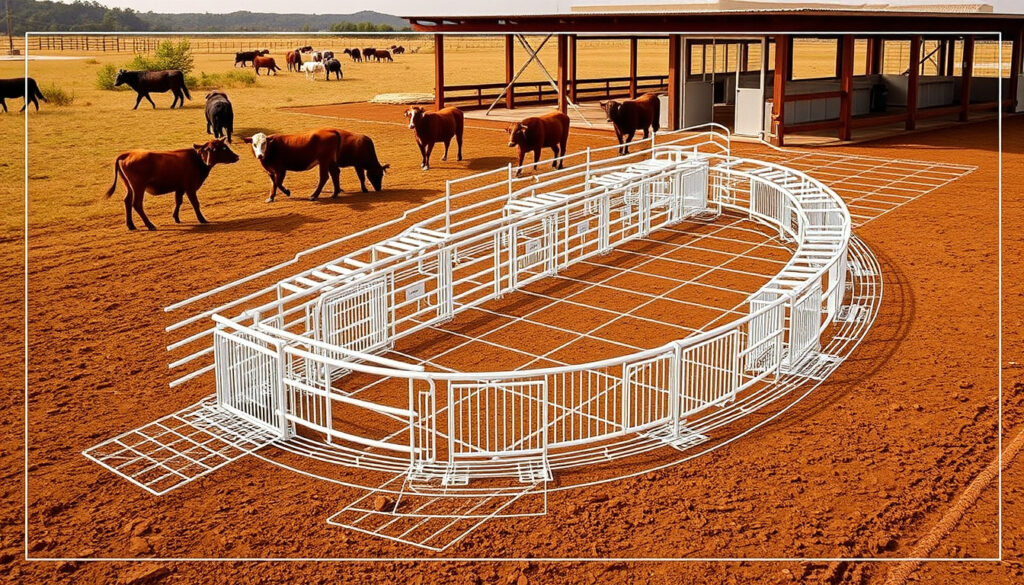
Traditional livestock chutes were straight, causing cattle to balk and panic. Grandin designed curved chutes that block the animals’ view of the slaughterhouse ahead, encouraging them to walk forward calmly. The design reduces stress and injury for both animals and workers. Today, her systems are used in over 30 countries.
“Good handling is good for business.”
Temple Grandin, in her writing on livestock management
Timeline: Key events in Temple Grandin’s life
- 1947 – Born in Boston, Massachusetts (Britannica (encyclopedia))
- 1950 – Diagnosed with autism (EBSCO Research Starters (academic biography database))
- 1960s – Developed the squeeze machine while at boarding school (Britannica (encyclopedia))
- 1970 – Earned B.A. in psychology from Franklin Pierce College (MIT Media Lab (academic institution))
- 1970s – M.S. in animal science from Arizona State University (MIT Media Lab (academic institution))
- 1989 – Ph.D. in animal science from the University of Illinois (MIT Media Lab (academic institution))
- 1986 – Published Emergence: Labeled Autistic
- 1990s–2000s – Designed livestock facilities worldwide; wrote multiple books
- 2010 – HBO film Temple Grandin released
- 2010s–present – Continues teaching, speaking, and advocating
Confirmed facts vs. what remains unclear
Confirmed facts
- Never married
- Invented squeeze machine (hug machine) (Britannica (encyclopedia))
- Professor at Colorado State University (Temple Grandin’s Official Autism Website (personal website))
- Designed curved livestock chutes used in half of U.S. plants (Autism History Project, University of Oregon (academic history project))
What’s unclear
- Exact net worth (not publicly disclosed)
- Whether she had any romantic relationships (she states she is asexual, but details are private)
- Duration of the jello-only diet period
- Precise number of livestock facilities designed globally
- Exact age at diagnosis (sources vary from 2 to 4 years) (EBSCO Research Starters (academic biography database))
- Reported IQ of 137 (not independently verified in all sources)
Quotes that capture Temple Grandin’s impact
Two of her most famous lines sum up her philosophy:
“I am different, not less.”
Temple Grandin, in her TED Talk and public speeches
“Good handling is good for business.”
Temple Grandin, in her writing on livestock management
These quotes reflect her dual legacy: advocating for acceptance of neurodiversity and proving that humane treatment of animals is also economically sound.
Summary: What Temple Grandin means for the future
Temple Grandin’s life is a concrete demonstration that a brain wired differently can solve problems that neurotypical minds miss. For the livestock industry, the choice is clear: adopt her humane handling methods or face growing consumer demand for ethical treatment. For the autism community, her example shows that a diagnosis is not a ceiling — it’s a different starting point.
gorick.com, weinclude.org, grandin.com, greatergood.berkeley.edu, en.wikipedia.org, thecommontable.eu
For a comprehensive overview of her life and contributions, Temple Grandins biography and inventions offers an in-depth look at her groundbreaking inventions and advocacy.
Frequently asked questions
Where can I watch the Temple Grandin movie?
The 2010 HBO film Temple Grandin starring Claire Danes is available on HBO Max and various streaming platforms. It won multiple Emmy Awards.
What is Temple Grandin’s net worth?
Her exact net worth is not publicly known. As a professor at Colorado State University and a bestselling author, she is estimated to have a net worth in the low millions, but no official figure exists.
How many books has Temple Grandin written?
She has authored more than 10 books, including Thinking in Pictures, Animals in Translation, and The Autistic Brain.
Is Temple Grandin still alive?
Yes. As of 2025, she is alive and continues to teach at Colorado State University, speak at events, and consult on livestock handling.
What is Temple Grandin’s educational background?
She earned a B.A. in psychology from Franklin Pierce College (1970), an M.S. in animal science from Arizona State University, and a Ph.D. in animal science from the University of Illinois (1989).
Does Temple Grandin give speeches?
Yes. She is a highly sought-after speaker on autism, animal behavior, and innovation. Her speaking schedule is available on her official website.
What is the Temple Grandin documentary on Netflix?
She appears in the Netflix documentary Our Planet and other series. Additionally, the HBO film is often streamed on Netflix in some regions.
More related posts
 Pakistan vs England: Out of T20 World Cup 2026 Semifinals
 Avril Lavigne: Biography, Lyme Disease, Albums and More
 Who is Lanlan Yang? Sydney Rolls-Royce Crash Mystery Explained
 Simpsons Characters: Complete Family Facts and List
 James Hooper: Drunken Crash, Arrest & Fox Sports Sacking
 School Terms SA 2025 – Official Dates and Holidays
 Fridayz Live 2025: Lineup, Tour Dates, Tickets and More
 Zoe McKenzie: Biography, Age, Family, and Political Career