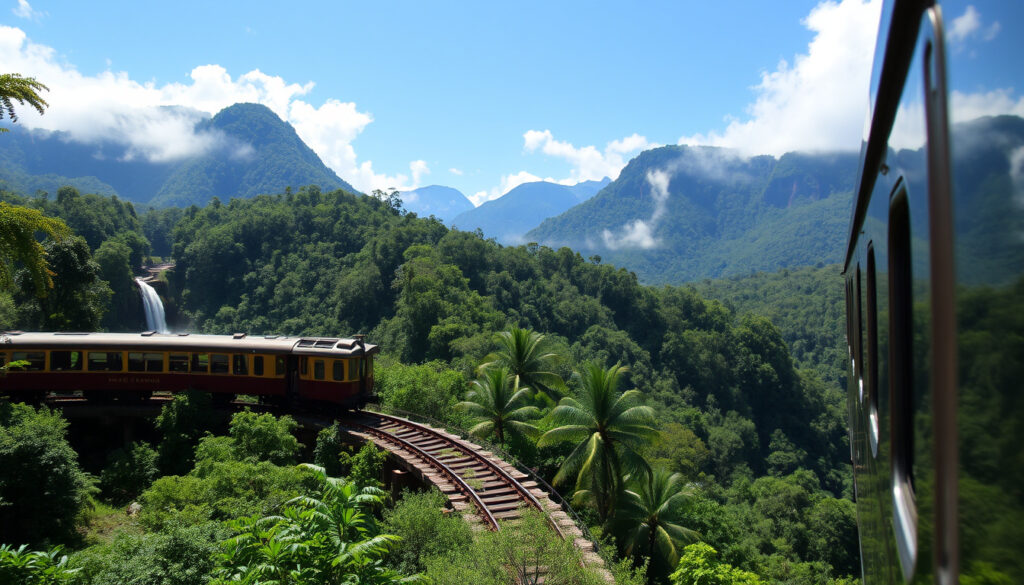
Kuranda Scenic Railway: Timetable, Duration, Tips & Guide
If you’ve been eyeing the Kuranda Scenic Railway for your Far North Queensland escape, you’re probably wondering how long the journey actually takes, whether it’s worth the fare, and which direction gives you the better views. This guide cuts through the official timetables and booking pages to give trip planners the concrete answers they need before handing over any cash.
Route: Cairns to Kuranda ·
Park: Barron Gorge National Park ·
Tunnels: 15 handmade ·
Operator Site: ksr.com.au ·
Combo Partner: Skyrail Rainforest Cableway
Quick snapshot
- Cairns to Kuranda route traverses Barron Gorge National Park (Skyrail Official)
- First train departs Cairns Central at 8:30am, arrives Kuranda at 10:25am (Skyrail Official)
- Scenic Railway carries 15 handmade tunnels along its route (Mini Adventures)
- Exact trip duration varies by starting station — Freshwater vs Cairns Central (Mini Adventures)
- No official consensus on best window-side seat preference (Mini Adventures)
- Morning departures: 8:30am and 9:30am from Cairns Central (Skyrail Official)
- Return trains: 2:00pm and 3:30pm from Kuranda (Skyrail Official)
- Secure preferred departure times by booking several days ahead (A Globe Well Travelled)
- Combo packages with Skyrail offer best value at $125–$127 for self-guided options (GetYourGuide)
| Key fact | Details |
|---|---|
| Official Website | ksr.com.au |
| Route Start | Cairns |
| Route End | Kuranda |
| Key Park | Barron Gorge National Park |
| Handmade Tunnels | 15 |
| Combo Option | Skyrail Rainforest Cableway |
How long is the Kuranda Scenic Railway trip?
The Scenic Railway covers 34 kilometers of track between Cairns and Kuranda, with the journey taking around 1 hour 45 minutes from Cairns Central station (Reef Info). Travelers starting from Freshwater cut that to approximately 1 hour 30 minutes, since the train originates closer to Kuranda (Mini Adventures). Most visitors pair this with a Skyrail return, which takes roughly 45 minutes one-way from base station to Kuranda, or 1 to 1.5 hours when accounting for stops at Red Peak and Barron Falls stations (Reef Info). The whole Kuranda experience — train, free time in the village, and return leg — typically spans 5 to 8 hours depending on departure time and how long you linger (A Globe Well Travelled).
Trip duration details
The Scenic Railway runs twice daily in each direction. Morning departures from Cairns Central leave at 8:30am (arriving 10:25am) and 9:30am (arriving 11:25am), according to the official Skyrail timetable page that coordinates train scheduling (Skyrail Official). Return trains from Kuranda depart at 2:00pm (back to Cairns by 3:55pm) and 3:30pm (back by 5:25pm). Trains from Freshwater leave at 8:55am and 9:55am, stopping at Barron Falls at 10:20am and 11:20am respectively on the way up, with return stops at 2:15pm and 3:45pm (Skyrail Official).
The 10-minute stop at Barron Falls on the return journey only happens going downhill from Kuranda — if you’re riding up, you’ll pass the falls but won’t have time to step out and photograph them from the dedicated viewing area.
Stops along the way
The most dramatic stop is Barron Falls, where the train pulls into a platform for about 10 minutes so passengers can step out onto viewing decks overlooking the cascade (A Globe Well Travelled). This stop is scheduled on the downhill return leg only, giving afternoon riders the best light on the falls. Freshwater station serves as the connection point between Skyrail arrivals and Scenic Railway departures, meaning many visitors transfer there regardless of which direction they’re traveling first.
Travelers prioritizing the Barron Falls platform stop must book the Scenic Railway for the afternoon downhill return — uphill riders pass the falls without disembarking.
Is the Kuranda railway worth it?
Heritage Class tickets start at A$56.50 one-way or A$85 return, while Gold Class upgrades cost from A$112 one-way or A$196 return (Mini Adventures). Standard tickets for both the Scenic Railway and Skyrail are similarly priced, but most visitors opt for a combo package since doing one-way on each transport mode gives you the full spectrum of experiences — the aerial canopy perspective from Skyrail plus the historic track and tunnel sequences from the train (Reef Info). Combo packages including one-way Skyrail and one-way Scenic Railway often represent the best value, particularly when they include return transfers from Cairns accommodation (Reef Info). Self-guided combo options run approximately $125 to $127 (GetYourGuide).
The railway traverses Barron Gorge National Park — a World Heritage-listed landscape that the Scenic Railway has been threading through since 1931. You’re not just getting from A to B; you’re riding through terrain that cannot be accessed any other way.
Pros and cons
Upsides
- Scenic Railway is accessible for wheelchairs and prams with advance notice, and there is a toilet on board (Reef Info)
- Gold Class offers food, drinks, and a dedicated host for the journey (Reef Info)
- 15 handmade tunnels along the route give the journey real engineering character (Mini Adventures)
- Most people visiting Kuranda do a one-way journey on each, maximizing what you see (A Globe Well Travelled)
Downsides
- Journey takes 1 hour 45 minutes each way — longer than Skyrail’s 45-minute ride (Reef Info)
- Limited departure times (two morning, two afternoon) constrain your schedule (Skyrail Official)
- Tickets should be booked several days ahead due to limited availability per departure (A Globe Well Travelled)
Traveler considerations
Kuranda village itself offers local markets, wildlife experiences such as the Australian Butterfly Sanctuary, and time to wander — typical free time runs 2 to 5 hours depending on how much you want to see (A Globe Well Travelled). The railway carves through landscapes that the Skyrail glides over, giving train passengers ground-level views of the gorge walls, waterfall close-ups, and the rainforest floor that gondola riders never see from above.
Families with toddlers should prioritize the Scenic Railway for its onboard toilet — the 1 hour 45 minute journey is significantly longer than Skyrail’s 45-minute ride.
Is it better to go up or down the Kuranda train?
Most visitors choose to ride Skyrail up to Kuranda in the morning and the Scenic Railway back down in the afternoon — this is the most common sequencing pattern, and it’s backed by photography considerations (Reef Info). Morning light tends to be clearer for photography on the Skyrail, and the train ride back through the gorge is a relaxed way to finish the day (Reef Info). The Scenic Railway only stops at Barron Falls for the downhill return journey, so riding up means you’ll pass the falls without the platform stop. The train climbs through 15 handmade tunnels, giving uphill passengers a close-up view of the engineering that built this route in the early 20th century.
Travel planners targeting Barron Falls specifically should book the Scenic Railway for the afternoon downhill run to access the 10-minute platform stop and afternoon light on the cascade.
Up vs down differences
The uphill journey departs Cairns Central in the morning and arrives in Kuranda mid-morning, giving you the bulk of the day in the village before the return train in the afternoon. The downhill journey departs Kuranda around 2:00pm or 3:30pm, catching the falls with the platform stop and potentially better afternoon light filtering through the gorge. The train’s direction doesn’t fundamentally change the comfort or experience — it’s a seated carriage either way — but the timing and lighting conditions differ meaningfully for photographers.
Best direction tips
If you’re primarily interested in the train ride itself, going uphill in the morning means you’ll see the gorge progressively opening up as you climb — a different visual experience than the downhill view of the gorge receding behind you. If you want the Barron Falls platform stop, you’ll need to be on the downhill return. For most visitors, the Skyrail-up / Scenic-Railway-down combination remains the practical default because it maximizes morning clarity on the cableway and evening relaxation on the train.
Photographers should default to Skyrail up and Scenic Railway down — morning light on the cableway pairs with afternoon sun on Barron Falls from the train’s dedicated platform.
What is the best side to sit on the Kuranda Scenic Railway?
There is no official recommendation from the Scenic Railway operator regarding which side of the carriage offers superior views, and traveler consensus online varies enough that no single side has emerged as the definitive winner. The route does feature curves and switchbacks that occasionally place scenery on alternating sides, meaning a window seat on either side will catch different moments throughout the journey. Photographers should plan to switch sides at major viewing points rather than assuming one fixed position will capture everything.
Window side recommendations
Based on passenger reports, the gorge side generally offers better waterfall and canyon views, while the mountain side provides closer looks at tunnel entrances and track infrastructure. Since the train runs twice daily in each direction, the sun angle shifts between morning and afternoon departures, which affects which side catches glare and which has softer lighting. Morning departures tend to have gentler light on the gorge-facing windows, making that a reasonable default for photographers.
Skyrail gondolas seat up to six people and are enclosed with open views on all sides — so Skyrail passengers face no seating-side dilemma at all. If your group is split on the question, Skyrail eliminates the decision entirely.
View optimization
Gold Class carriages offer more spacious seating and a dedicated host, but the window-side dynamics are similar to Heritage Class — the key difference is legroom and onboard service rather than view angle. Whether you’re in Heritage or Gold Class, the practical move is to secure a window seat, stay alert at curves, and be ready to shift your attention as the train rounds bends. The 15 handmade tunnels and Barron Falls approach are the two sequences most worth capturing on either side.
Window-seated passengers on either side will catch different moments as the train navigates curves — switching sides at key viewing points gives you the complete experience.
Is there a toilet on the Kuranda Scenic train?
Yes — the Scenic Railway has a toilet on board, and the service is accessible for wheelchairs and prams with advance notice (Reef Info). This makes it a practical option for families with young children or travelers with accessibility needs who might find the Skyrail boarding process more challenging. Skyrail boarding requires stepping into a slowly moving gondola, which can be difficult for visitors with significant mobility issues, though staff are on hand to assist (Reef Info).
Travelers with mobility concerns should book the Scenic Railway for the leg they can most comfortably manage — the train’s fixed platform boarding is more straightforward than Skyrail’s moving gondola entry, but the 1 hour 45 minute journey is considerably longer than Skyrail’s 45-minute ride.
Accessibility features
The Scenic Railway operator requests advance notice for wheelchair and pram access, which allows staff to prepare the appropriate carriage and ensure the lift or ramp is positioned correctly at stations. This advance-notice requirement is standard practice rather than a barrier — calling ahead a day or two is typically sufficient. The toilet on board is designed to accommodate standard wheelchair dimensions, though visitors with larger mobility equipment should confirm specifics with the operator before booking.
Onboard facilities
Beyond the toilet, Heritage Class carriages offer reasonable legroom in standard seats, while Gold Class adds more spacious seating, food, drinks, and a host who provides commentary throughout the journey (Reef Info). Neither class offers meal service in the traditional restaurant sense, but Gold Class snacks and beverages remove the need to pack food for the journey. Skyrail gondolas have no toilet facilities — the 45-minute ride is short enough that this rarely presents a problem, but it’s worth noting if you’re combining multiple Skyrail stops at Red Peak and Barron Falls where you’ll be walking boardwalks rather than staying in the gondola.
Families with toddlers or anyone who prefers not to plan bathroom breaks around a 45-minute window should factor in the Scenic Railway’s onboard toilet — it’s a genuine practical advantage over Skyrail for certain traveler profiles.
Scenic Railway vs Skyrail: Head-to-head comparison
Six key factors separate these two Kuranda transport options, from journey duration to accessibility and view type.
| Factor | Scenic Railway | Skyrail |
|---|---|---|
| Journey duration (one-way) | 1h 45min from Cairns, 1h 30min from Freshwater | 45min base, 1–1.5h with stops |
| View type | Ground-level gorge, tunnel, and waterfall views | Aerial canopy and gorge perspective |
| Onboard toilet | Yes | No |
| Mobility access | Wheelchair accessible with advance notice | Step into moving gondola — challenging for some |
| Barron Falls stop | 10-minute platform stop on downhill only | Viewing station with boardwalks |
| Ticket class options | Heritage Class or Gold Class (with host/food) | Standard or Diamond View (glass floor) |
Most travelers don’t choose between them — they do both. The combo approach means experiencing the rainforest from the ground, the air, and the village, capturing the full range of what Far North Queensland’s UNESCO World Heritage landscape offers.
How to book Kuranda Scenic Railway tickets online
Booking online is the practical standard — the Scenic Railway operates limited seats per departure, and tickets sell out during peak season. Here’s the step-by-step for securing your spot.
- Visit the official operator site at ksr.com.au — this is the primary booking channel, and it links directly to the current timetable and availability calendar.
- Choose your direction and class — Heritage Class (A$56.50 one-way, A$85 return) is the standard option; Gold Class (A$112 one-way, A$196 return) adds space and a hosted experience.
- Select your departure time — morning trains depart Cairns Central at 8:30am or 9:30am; return trains leave Kuranda at 2:00pm or 3:30pm.
- Add Skyrail combo if desired — the combined Skyrail and Scenic Railway ticket (roughly $125–$127 for self-guided) typically offers the best per-leg value for visitors doing both transports.
- Book several days ahead — limited availability per departure means walk-up tickets are unreliable outside of low season.
Travelers booking through third-party platforms like GetYourGuide may find packaged tours that include hotel transfers — useful if you’re staying outside Cairns center and don’t want to arrange your own transport to the stations.
Timetable at a glance
The Scenic Railway maintains a simple twice-daily schedule in each direction, with the following confirmed times from the official coordination page between Skyrail and Queensland Rail Travel.
| Departure point | Departure 1 | Departure 2 |
|---|---|---|
| Cairns Central (uphill) | 8:30am → arrives Kuranda 10:25am | 9:30am → arrives Kuranda 11:25am |
| Freshwater (uphill) | 8:55am → Barron Falls 10:20am | 9:55am → Barron Falls 11:20am |
| Kuranda (downhill) | 2:00pm → Barron Falls 2:15pm | 3:30pm → Barron Falls 3:45pm |
| Kuranda (downhill) | 2:00pm → arrives Cairns Central 3:55pm | 3:30pm → arrives Cairns Central 5:25pm |
The pattern is clear: there’s no midday train option — once you’re in Kuranda, you’re staying until at least 2:00pm.
The Skyrail experience is quiet, smooth, and aerial, with a perspective of the canopy and gorge that cannot be obtained from ground level. — Reef Info
Morning light tends to be clearer for photography on the Skyrail, and the train ride back through the gorge is a relaxed way to finish the day. — Reef Info
For travelers visiting Far North Queensland, the choice between the Kuranda Scenic Railway and Skyrail is largely a false dilemma — the combo approach gives you both experiences for roughly double the ticket price of one leg. The Scenic Railway wins on duration, accessibility, and the ground-level gorge perspective; Skyrail wins on time, aerial views, and the convenience of gliding over the canopy. Families with young children, accessibility needs, or a tight schedule should weight those factors accordingly — but for most visitors with a full day to spend, doing Skyrail up and the train back down is the move that leaves the strongest impression.
How do I book Kuranda Scenic Railway tickets?
Book through ksr.com.au — the official operator site — or via approved third-party platforms like GetYourGuide. Book several days in advance, especially during peak season, as each departure has limited seats.
What is the Kuranda Scenic Railway timetable?
Trains depart Cairns Central at 8:30am and 9:30am, arriving in Kuranda at 10:25am and 11:25am respectively. Return trains leave Kuranda at 2:00pm and 3:30pm, arriving back in Cairns at 3:55pm and 5:25pm.
Can you go to Kuranda without a tour?
Yes — self-guided travel is straightforward. Book your train and Skyrail tickets online, arrive at Cairns Central station for your departure, and the transport logistics handle themselves. Combo packages with hotel transfers are also available through tour operators if you prefer someone else managing the connections.
How long is the cable car ride to Kuranda?
Skyrail takes approximately 45 minutes one-way from base station to Kuranda, or 1 to 1.5 hours if you stop at both Red Peak and Barron Falls mid-stations to walk the rainforest boardwalks.
Where is the Kuranda Scenic Railway station?
The primary departure point is Cairns Central Railway Station in Cairns city center. An alternative departure point is Freshwater Railway Station, which is also the connection point for Skyrail arrivals transferring to the Scenic Railway.
Does the Kuranda Scenic Railway have accessible features?
Yes. The Scenic Railway is accessible for wheelchairs and prams with advance notice, and there is a toilet on board. Skyrail requires stepping into a moving gondola, which can be challenging for visitors with significant mobility issues, though staff assist with boarding.
Related reading: Kuranda Scenic Railway vs Skyrail · Kuranda Railway Guide
tripadvisor.com, youtube.com, youtube.com, thetraveltemple.com.au
After checking the timetable and duration, travelers often turn to the tickets and booking guide for current prices and seamless reservation steps.
More related posts
 Pakistan vs England: Out of T20 World Cup 2026 Semifinals
 World Test Championship: Rules, 2027 Final, and Qualification
 Ethan Strange not playing? Injury, father John, ADHD story
 Lars Ulrich: Health, Net Worth, and Richest Drummer
 Gabe Newell: Net Worth, Biography, and Controversies (2024)
 Bo Burnham: Anxiety, Relationship, and Career Achievements
 Trevor Noah: Personal Life, Relationships & Health
 Bunnie Xo: Age, Real Name, Net Worth, and Her Life with Jelly Roll